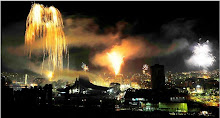
Obama won ... I am going back home :)
Goodbye Kosova/o!!!
Faleminderit and hvala for everything!!!!
Peace, am out ...
Wednesday, November 5, 2008


Wednesday, October 29, 2008
End of my Era ...
With the upcoming elections, I think it's time for me to end this blogging endeavor. I do not seem to be into it anymore. Kosovan(r)s only have their destinies in their own hands now. What they do with it is left for history to judge. I think my life and efforts are needed more at home in the US.
Unless someone proposes taking over blogging for this site, this might be my "amazing last post" for this blog.
Be blessed all and vote for Obama ... Zod knows the world needs that change (and that is a not an arrogant American statement).
Thank you all for the support thus far. Thank you Kosovo/a for providing me with a home until now.
Peace and love y'all.
Unless someone proposes taking over blogging for this site, this might be my "amazing last post" for this blog.
Be blessed all and vote for Obama ... Zod knows the world needs that change (and that is a not an arrogant American statement).
Thank you all for the support thus far. Thank you Kosovo/a for providing me with a home until now.
Peace and love y'all.
Wednesday, October 15, 2008
I have always wondered whatever happened with this matter ...
... I feel closer to Albania after reading Kadare's " The General of the Dead Army (1963)".
The final mystery
Finding the perpetrators of a lethal explosion could polish Albania’s image
The final mystery
Oct 9th 2008 | TIRANA
From The Economist print edition
From The Economist print edition
Finding the perpetrators of a lethal explosion could polish Albania’s image
A MUDDY crater marks the spot near Tirana airport where a stockpile of artillery shells blew up last March. The blast killed 26 people, including several children, and injured more than 250 others. Dozens of houses in the next-door village were ruined beyond repair.
Sali Berisha, Albania’s prime minister, responded by removing from office Fatmir Mediu, the defence minister. Damaged homes are being rebuilt with government handouts. But people are still angry. “This”, says Fiqiri Ismaili, the mayor, “was the worst disaster since communism ended.”
Finding out who caused the explosion, and bringing the culprits to justice, is a test of Albania’s credibility as a future member of NATO. It would also help Mr Berisha achieve his goal of making Albania a formal candidate to join the European Union. That is because the EU’s sharpest criticisms of Albania are directed at the country’s judicial system. All too often, prosecutors and judges are bribed or bullied by politicians.
Most of the bomb’s victims were employees of Albademil, a local contractor working for an American firm selling ammunition to the new Afghan army. When the dump exploded, some workers were repackaging 40-year-old Chinese-made shells to disguise their origin (American military contractors are banned from dealing in Chinese equipment). Others were removing gunpowder and detonators from supposedly dud shells so that the metal casings could be sold for scrap.
| |
 | |
Picking up the pieces after the blast |
Ina Rama, the chief prosecutor, who heads the investigation, says that four Albanians may soon face charges. She says that there were “no safety precautions at all” at the site. America’s Justice Department has launched its own investigation and is providing valuable help, she says. Even so, many Albanians fear that there will be a cover-up. In mid-September Kosta Trebicka, a businessman turned whistle-blower in the case, was killed when his jeep crashed on a remote mountain road. Opposition politicians claimed that the death of Mr Trebicka, who was a witness for the prosecution, was not accidental.
Mr Berisha hopes that joining NATO will help him change Albania’s reputation for corruption and lawlessness. He has already notched up successes. The economy has been growing by some 6% a year, agriculture is reviving and foreign investment is starting to flow in. A Canadian company is refurbishing neglected oilfields; a Turkish group is setting up a new mobile-phone network. A new highway to Kosovo is due to be finished next summer, boosting regional trade and encouraging tourists. Albania has also scored better in two influential reports: the World Bank’s “Doing Business” and Transparency International’s index on corruption. If justice is done over the munitions explosion, next year’s marks should be even better.
Monday, October 13, 2008
In the spirit of status quo and considering the UNSC dissed his Kosovo-related work ...
I would like to congratulate Mr. Ahtisaari for all his work and efforts at promoting international peace and the Nobel Peace award he just received. The people of Namibia congratulate you also, sir. Like they say, a prophet is never appreciated on her continent ;)
Saturday, October 11, 2008
help me...
Cafes, clubs and restaurants are opening and closing so fast in Kosovo that I cannot keep up or go to them all. Please, if you have anything to say about any cafe, club or restaurant you have been to lately, send to me at Kosovo2007@gmail.com.
ciao
ciao
Friday, October 10, 2008
Big or little sister?
Getting on with big brother
“Independent” Kosovo is in limbo, but ties with Serbia are quietly improving
Oct 9th 2008 | PRISTINA
From The Economist print edition
From The Economist print edition
“Independent” Kosovo is in limbo, but ties with Serbia are quietly improving
A BLUE flag emblazoned with a golden map of Kosovo and six white stars flutters over the Merdare border crossing. Signs welcome visitors to the independent “Republic of Kosovo”—but that is not how much of the world sees it.
Ever since Kosovo declared independence from Serbia on February 17th, after nine years of custodianship by the United Nations, it has struggled to gain international acceptance. America and 22 of 27 European Union members have recognised it, along with 26 other states. But Russia, China and most of the UN’s 192 members have shunned it. This leaves Kosovo in limbo, its legitimacy still questioned. Some 90% of its 2m people are ethnic Albanians, but several Serbian-dominated enclaves are still beyond the control of Kosovo’s government.
The UN General Assembly this week approved a Serbian motion asking the International Court of Justice (ICJ) to rule on the legality of Kosovo’s independence. The court could take one or two years to issue a non-binding ruling, but the move could dim Kosovo’s hopes of gaining wider acceptance. Its leaders took time to wake up to the threat. “They are still in the mindset of the EU and the Americans being strong and who cares about the rest?” says Ilir Deda of KIPRED, a think-tank in Pristina.
More worrying is that the EU’s police and justice mission for Kosovo, called EULEX, has been so slow to arrive. It was supposed to be up and running four months ago, but has been hobbled by both politics and logistics. Only 350 of the 1,900 international policemen, judges and other personnel due to be deployed across the country have arrived so far. And they are unable to operate in the Serbian north of Kosovo. The absence of any new UN Security Council resolutions on Kosovo’s status has left the country with a plethora of international missions, none of which knows who is supposed to do what. One Kosovar official despairs of the “organised anarchy” of the international presence.
In the absence of strong international supervision, standards of governance in Kosovo are slipping. Opposition leaders are being bought off and boards of state companies packed with cronies. A briefing paper for Pieter Feith, the EU’s representative in Kosovo, complains that recent appointees “have direct political affiliations and fail to meet minimum professional qualifications requirements”.
The overall picture is not wholly negative, however. A new school seems to open every week. Despite the estrangement of Serbs and Albanians, diplomacy is proceeding. For the first time, Kosovo Albanian ministers and top Serbian officials are talking directly, with no foreign mediators, to solve practical problems. This began in July when the new Serbian government of President Boris Tadic put new people in the ministry dealing with Kosovo. The main officials are now Kosovar Serbs who have good relations with their counterparts. Serbia’s new minister in charge served in the pre-independence government of Kosovo led by Bajram Rexhepi. Another top official, Oliver Ivanovic, speaks fluent Albanian and was once a deputy in Kosovo’s Albanian-dominated parliament.
Mr Rexhepi, now mayor of the Albanian half of the divided city of Mitrovica, says that although such contacts may not on their own be enough to normalise Kosovo’s status and its relationship with Serbia, they can make a big difference. Like his Serbian counterparts he says he cannot hold meetings or discussions officially, but that unofficial contacts continue. “In this way you can solve problems,” he says, “but without too much publicity.”
Thursday, October 9, 2008
M&M
Kosovo is recognized by 2 of its immediate neighbours : Macedonia and Montenegro.
That brings the number of recognitions to 50. We have been told to expect more recognitions in October. Does this mean better power supply? Can I get a witness up in here?!?
That brings the number of recognitions to 50. We have been told to expect more recognitions in October. Does this mean better power supply? Can I get a witness up in here?!?
Wednesday, October 8, 2008
I am not quite sure it can be taken back but let's see ....
As if the early winter and constant power cuts were not enough to make an "international" whine, the ICJ has decided to sour the moods of Kosovars with its decision to issue an advisory opinion on Kosovo's UDI.
Let the games begin?
----
Hola to Defense Secretary Robert M. Gates of the USA. Say hi to mum for me when you get home ...
Let the games begin?
----
Hola to Defense Secretary Robert M. Gates of the USA. Say hi to mum for me when you get home ...
Sunday, September 28, 2008
Oh, Boris, you just get sexier and sexier by the day ...
A new strongman
The Serbian president has become unusually powerful
Sep 18th 2008
From The Economist print edition
From The Economist print edition
The Serbian president has become unusually powerful
WITH bombers streaking overhead during a military passing-out ceremony in Belgrade on September 13th, there was no mistaking the expression of satisfaction on the face of Boris Tadic, Serbia’s president. It looked more like his victory parade. Just two months after struggling to put together a European-leaning government in July, Mr Tadic now stands as the undisputed master of his country.
This is because the largest Serbian opposition group, the ultranationalist Radical Party, has imploded thanks to an internal war between the devotees of Vojislav Seselj, currently standing trial for war crimes at the United Nations’ tribunal in The Hague, and the allies of the more pragmatic Tomislav Nikolic, who led the party within Serbia.
The split became apparent on September 2nd, when two Radical women deputies issued blood-curdling curses in parliament. They accused Mr Tadic of being “a traitor” because his government had arrested Radovan Karadzic, the former Bosnian Serb president, and sent him to stand trial in The Hague. Nothing unusual here. But then one of them, Vjerica Radeta, shouted something odd: “A curse on every Radical, on his seed and family, who ever meets with Tadic after the shameful extradition.”
Soon her meaning became clear: Mr Nikolic had been secretly meeting Mr Tadic to strike a deal to ratify a key agreement with the EU that the Radicals had hitherto opposed. Mr Nikolic announced that the agreement was good for Serbia. This raised the ire of Mr Seselj, who from his prison cell urged deputies to vote against the accord.
As a result the Radical party has fallen apart. Mr Nikolic has been expelled with 17 of his supporters and is setting up his own party. Mr Tadic is thus freer to pursue his rapprochement with the EU. “On the one hand this is the best thing that could have happened to Serbia because the Radicals are divided into pro- and anti-European wings,” says Zoran Lucic, a top Serbian pollster, “But on the other I am afraid that for some time we will have an effective one-party system.” And that party, of course, is Mr Tadic’s.
Not everything is going his way. On September 15th the Netherlands blocked an EU trade agreement with Serbia, saying it must first find and extradite Ratko Mladic, the former Bosnian Serb military commander. Now that Mr Tadic is all-powerful, that may be easier to do.
Wednesday, September 10, 2008
Tuesday, August 26, 2008
squabbles...and I am taking sides ....
According to a report from UNMIK:
"The Head of the Diocese of Raska and Prizren Bishop Artimije tried to dismiss the Decani Monastery Abbot Bishop Teodosije . . . ."
I am siding with Bishop Teodosije; he and his monks are the best hosts I have ever met in Kosovo. Open-minded with hearts of gold and love like Jesus. They have my vote anyday over whoever.
"The Head of the Diocese of Raska and Prizren Bishop Artimije tried to dismiss the Decani Monastery Abbot Bishop Teodosije . . . ."
I am siding with Bishop Teodosije; he and his monks are the best hosts I have ever met in Kosovo. Open-minded with hearts of gold and love like Jesus. They have my vote anyday over whoever.
Monday, August 25, 2008
Vote for O[s]ama - Bi[n La]den '08
To balance out my earlier endorsement, here is a public announcement for a friend of mine who is looking for Republican and right wing conservative investors for pumping out t-shirts and other election material.
"O[s]ama - Bi[n La]den" are hereby declared trademarked virtually and in real life ... royalties are expected :)
"O[s]ama - Bi[n La]den" are hereby declared trademarked virtually and in real life ... royalties are expected :)
Monday, August 18, 2008
Let's talk Human Trafficking ... again ...
... especially since Kosovo always gets special mentions in these reports.
People-trafficking and people-smuggling Drawing lines in a dark place
Aug 14th 2008 From The Economist
Coercing hapless human beings into sex or servitude is obviously evil, but defining the problem (let alone solving it) is very hard

LIVING from the forced labour, or unwillingly provided sexual services, of vulnerable people is a horrific business, and more should be done to punish the perpetrators and succour the victims. That is a sentiment to which almost all governments readily assent, even in the (quite large) slice of the world where links exist between officialdom, the police and the shady types who trade in flesh. And at least in principle, cross-border trafficking is acknowledged to be so manifestly dreadful that every civilised state must be seen to help correct this wrong. As one sign of this feeling, a Council of Europe convention on trafficking went into force this year; 17 countries have ratified it. The American government has for the past eight years been mandated by law to wage a many-fronted struggle against human trafficking, at home and around the world. And some hard arguments are now raging in Washington, involving politicians, lobby groups and rival government agencies, about whether the struggle should be escalated. Why, one might ask, should there be arguments about an issue that, in moral terms, seems so clear-cut? Mainly because the precise definition of trafficking, and hence of trafficking victims, is in reality quite difficult—whether you are a policeman or a moral philosopher.
Among pundits, people-trafficking is distinguished from the lesser evil of people-smuggling—an uncomfortable but almost unavoidable part of social reality in areas that adjoin rich countries with a demand for labour. In Kosovo, it is an open secret that you can be whisked illegally to Vienna by paying €4,000 ($6,000) to a professional smuggler. The Bosnian town of Bijeljina, once a black spot for ethnic cleansing, is now a way-station for south Asians who pay around $16,000 per head to be smuggled into the EU heartland: half on departure and half on arrival.
People-smuggling is done with the consent of those involved; they have no further debt to the gangsters who abet them once they arrive. Trafficking means moving people under duress or false pretences—or in order to use them for forced labour (ranging from domestic work to commercial sex). So the theory goes; but in practice, as the latest State Department report concedes, there is an overlap between the two activities. It often happens, for example, that a poor Indian is hired for menial work in a Gulf state—only to find that his wage is much less than promised, and his passport is seized. This leads to a form of servitude, and that person’s treatment could be called trafficking. Despite the grey area, public perception of the two problems often diverges. In Australia, for example, public opinion favours a tough line over people-smuggling—but there has been a surge of sympathy for the victims of trafficking (often brought to Australia from Thailand or Indochina) since the release last year of “The Jammed”, a film set in a Melbourne brothel.
And in recent years both the sharper definition of, and the fight against, human-trafficking have become a high priority for the State Department; its grading of other countries’ anti-trafficking efforts is an elaborate and closely-watched business. Countries in “tier 1” (including most of the EU but not Ireland, Greece, Estonia or Latvia) are deemed to comply fully with the minimum standards of American law. Those in “tier 2” don’t yet comply but are trying hard. A lower tier, labelled “Watch List”, consists of countries that are trying, but not hard enough or with good enough results. In the bottom “tier 3” (including American allies like Saudi Arabia) are those that are neither complying nor trying hard enough. Even rickety post-Soviet states (see chart) can improve their scores if they follow what is deemed to be the right advice. As the State Department has found, it is hard to discuss cross-border trafficking without looking at what occurs inside countries. Its reports have thus broadened into a more general look at the ways in which people are forced to work or have sex against their will. Servitude, it finds, can take many forms: for example, children are mutilated and forced to beg—or else fight in ghastly wars. Slavery, the State Department suggests, happens in many successful emerging economies; it cites bonded labour in Brazil’s plantations, or children working long hours making bricks in China. Indeed, bits of the department’s 2008 report read as though they were penned by a left-of-centre NGO, decrying the dark side of globalisation.And some of the other ideological issues now coming to a head in Washington are even more contentious. Behind them all is an emotive question: whether there can be such a thing as willing prostitution.
How far can you go?
Since 2002, the policy of the United States has been to oppose prostitution, and to urge all governments to “reduce the demand” for prostitutes through education and by punishing those who patronise them. But how far can this principle be pressed? As passed by the House of Representatives last year, a new bill on protecting the victims of trafficking could have made it illegal for Americans to consort with prostitutes anywhere in the world (even when the prostitutes are adults, and in countries where buying sex is legal). The House version of the bill would also broaden the obligations of America’s federal (as opposed to state) authorities to curb the trafficking of sex workers inside the country. The Justice Department (amid many other objections) said all this would place a huge burden on federal agencies that are already overstretched. Supporters of stepping up the fight (who range from feminist groups to the religious right) compare their campaign to that of William Wilberforce, whose efforts to free the British empire’s slaves bore fruit 200 years ago. John Miller, an ex-head of the State Department’s anti-trafficking programme, has deplored the Justice Department’s campaign to modify the proposed legislation; its complaints, he says, imply leniency towards an absolute evil, slavery. But the American Civil Liberties Union, a lobby group, has praised the Senate for deleting language which, in its view, would make prostitution and trafficking virtually identical. Lots more arguments can be expected before the bill reaches the White House. In fact, says Jorgen Carling, a Norwegian who has studied the trafficking of Nigerian women to Europe, it is rarely possible to draw the absolutely clear line that policymakers want between “innocent victimhood” and “willing participation” in sex work. For example, people may know that they are being taken abroad as sex workers, but have no idea of the harsh conditions, and the absolute loss of control over their lives, that they will face. This may be an area of life where most people can recognise evil when they see the details of one horrifying case—but where it will always be hard to make hard-and-fast rules that suit every country
People-trafficking and people-smuggling Drawing lines in a dark place
Aug 14th 2008 From The Economist
Coercing hapless human beings into sex or servitude is obviously evil, but defining the problem (let alone solving it) is very hard

LIVING from the forced labour, or unwillingly provided sexual services, of vulnerable people is a horrific business, and more should be done to punish the perpetrators and succour the victims. That is a sentiment to which almost all governments readily assent, even in the (quite large) slice of the world where links exist between officialdom, the police and the shady types who trade in flesh. And at least in principle, cross-border trafficking is acknowledged to be so manifestly dreadful that every civilised state must be seen to help correct this wrong. As one sign of this feeling, a Council of Europe convention on trafficking went into force this year; 17 countries have ratified it. The American government has for the past eight years been mandated by law to wage a many-fronted struggle against human trafficking, at home and around the world. And some hard arguments are now raging in Washington, involving politicians, lobby groups and rival government agencies, about whether the struggle should be escalated. Why, one might ask, should there be arguments about an issue that, in moral terms, seems so clear-cut? Mainly because the precise definition of trafficking, and hence of trafficking victims, is in reality quite difficult—whether you are a policeman or a moral philosopher.
Among pundits, people-trafficking is distinguished from the lesser evil of people-smuggling—an uncomfortable but almost unavoidable part of social reality in areas that adjoin rich countries with a demand for labour. In Kosovo, it is an open secret that you can be whisked illegally to Vienna by paying €4,000 ($6,000) to a professional smuggler. The Bosnian town of Bijeljina, once a black spot for ethnic cleansing, is now a way-station for south Asians who pay around $16,000 per head to be smuggled into the EU heartland: half on departure and half on arrival.
People-smuggling is done with the consent of those involved; they have no further debt to the gangsters who abet them once they arrive. Trafficking means moving people under duress or false pretences—or in order to use them for forced labour (ranging from domestic work to commercial sex). So the theory goes; but in practice, as the latest State Department report concedes, there is an overlap between the two activities. It often happens, for example, that a poor Indian is hired for menial work in a Gulf state—only to find that his wage is much less than promised, and his passport is seized. This leads to a form of servitude, and that person’s treatment could be called trafficking. Despite the grey area, public perception of the two problems often diverges. In Australia, for example, public opinion favours a tough line over people-smuggling—but there has been a surge of sympathy for the victims of trafficking (often brought to Australia from Thailand or Indochina) since the release last year of “The Jammed”, a film set in a Melbourne brothel.
And in recent years both the sharper definition of, and the fight against, human-trafficking have become a high priority for the State Department; its grading of other countries’ anti-trafficking efforts is an elaborate and closely-watched business. Countries in “tier 1” (including most of the EU but not Ireland, Greece, Estonia or Latvia) are deemed to comply fully with the minimum standards of American law. Those in “tier 2” don’t yet comply but are trying hard. A lower tier, labelled “Watch List”, consists of countries that are trying, but not hard enough or with good enough results. In the bottom “tier 3” (including American allies like Saudi Arabia) are those that are neither complying nor trying hard enough. Even rickety post-Soviet states (see chart) can improve their scores if they follow what is deemed to be the right advice. As the State Department has found, it is hard to discuss cross-border trafficking without looking at what occurs inside countries. Its reports have thus broadened into a more general look at the ways in which people are forced to work or have sex against their will. Servitude, it finds, can take many forms: for example, children are mutilated and forced to beg—or else fight in ghastly wars. Slavery, the State Department suggests, happens in many successful emerging economies; it cites bonded labour in Brazil’s plantations, or children working long hours making bricks in China. Indeed, bits of the department’s 2008 report read as though they were penned by a left-of-centre NGO, decrying the dark side of globalisation.And some of the other ideological issues now coming to a head in Washington are even more contentious. Behind them all is an emotive question: whether there can be such a thing as willing prostitution.
How far can you go?
Since 2002, the policy of the United States has been to oppose prostitution, and to urge all governments to “reduce the demand” for prostitutes through education and by punishing those who patronise them. But how far can this principle be pressed? As passed by the House of Representatives last year, a new bill on protecting the victims of trafficking could have made it illegal for Americans to consort with prostitutes anywhere in the world (even when the prostitutes are adults, and in countries where buying sex is legal). The House version of the bill would also broaden the obligations of America’s federal (as opposed to state) authorities to curb the trafficking of sex workers inside the country. The Justice Department (amid many other objections) said all this would place a huge burden on federal agencies that are already overstretched. Supporters of stepping up the fight (who range from feminist groups to the religious right) compare their campaign to that of William Wilberforce, whose efforts to free the British empire’s slaves bore fruit 200 years ago. John Miller, an ex-head of the State Department’s anti-trafficking programme, has deplored the Justice Department’s campaign to modify the proposed legislation; its complaints, he says, imply leniency towards an absolute evil, slavery. But the American Civil Liberties Union, a lobby group, has praised the Senate for deleting language which, in its view, would make prostitution and trafficking virtually identical. Lots more arguments can be expected before the bill reaches the White House. In fact, says Jorgen Carling, a Norwegian who has studied the trafficking of Nigerian women to Europe, it is rarely possible to draw the absolutely clear line that policymakers want between “innocent victimhood” and “willing participation” in sex work. For example, people may know that they are being taken abroad as sex workers, but have no idea of the harsh conditions, and the absolute loss of control over their lives, that they will face. This may be an area of life where most people can recognise evil when they see the details of one horrifying case—but where it will always be hard to make hard-and-fast rules that suit every country
Friday, August 8, 2008
Official Endorsement!!! - Luna loses her mind ....
After 2 summer of thoughts and vanity checks, this blog has decided to finally and officially endorse:

for the US President. Cute, smart, a fresh of breath air atimes and sometimes loopy but definitely no angel, this might just be the man to lead US through trying changing times. Well, he has my vote come November. I want to encourage all of you with friends and relatives who are Americans to encourage them to vote for this beautiful man in the November elections.
gObama!!!

It's Summer and it's here ....
Welcome to the 2008 Olympics in China!!!
The Chinese left no carpets unturned for the opening event ... dazzling. Though Kosovo might not have a team there, it is still a very good distraction for the summer from competing news of of war, pillage and skirmishes ... there goes Russia trying to start a war with Georgia .... enjoy the show!!!
The Chinese left no carpets unturned for the opening event ... dazzling. Though Kosovo might not have a team there, it is still a very good distraction for the summer from competing news of of war, pillage and skirmishes ... there goes Russia trying to start a war with Georgia .... enjoy the show!!!
Thursday, August 7, 2008
BBC on Life in Kosovo
BBC has been running a series of stories on people's lives in Kosovo. Nothing too analytical. They pick someone (usually a guy, of course) and tell his story and issues concerning him and his environment. Nice readings. Here are links and excerpts to stories thus far:
Kosovo lives: A mixed village
""The most painful thing for us, is when we see people selling up and leaving," says Dragana Gospic. And she relates how one of her neighbours, a fellow Serb, has just sold his land, and is now selling his house. "Each person who leaves makes it harder for those who remain," she explains. At 33, originally from the Bosnian town of Mrkonjic Grad, she lives in the village of Vidanje, near Klina in central Kosovo, with her husband Ranko and daughters Tanja and Sanja."
Kosovo lives: Ivan's journey
"Ivan Radic is one of nearly a quarter of a million people from Kosovo still classified by the UN as internally displaced persons (IDPs) nine years after the war. The vast majority are ethnic Serbs, now scattered across Serbia with a minority living in Kosovo's enclaves. Most of the hundreds of thousands of wartime Albanian IDPs were able to return home long ago. "I am in Urosevac almost every night - when I dream," Ivan tells me, remembering his birthplace as we stand on the central bridge in the town of Mitrovica."
Kosovo lives: Albanian in Mitrovica
"On the table in his front room, Driton Gerguri opens a red album, like a family heirloom.
"Other kids collected stamps, but I collected these," he says proudly. Page after page of carefully mounted badges and tie pins, from sporting events and factories, anniversaries and celebrations.
Each is like a crumb of the common life that people of different nationalities used to live in the old Yugoslavia. Taken together, the album is like a carefully preserved cake of a bygone world. "
Kosovo lives: Between two worlds
"His English is flawless, local knowledge near faultless but having him guide you around Pristina can take awfully long. Mehmed Sezai Shehu, or Meti as he likes to be known, seems barely able to cross a street without running into an acquaintance in the Kosovan capital. On the two visits I have met him, a simple stroll about the city centre became a wade through handshakes, jokes and banter. Not a few of the people knew him from across a kitchen table or a classroom desk because for the past decade, apart from the war period, Meti has been teaching his city English full-time. "
Kosovo lives: Not gone with the wind
Their great-grandfather built Urosevac, the Nikolic daughters like to say, so how can they leave it now? Sani (Santipa), the very image of mildness and physical slightness, beams mischievously at the memory of how she floored a US soldier with her karate skills, the day K-For came to evacuate her family. I am not saying she is over 60, because her disabled younger sister Lili (Liljana) reminded me, when I inquired, that you must never ask a lady her age. A smile of assent crossed the mask-like face of their blind mother Dani (Daniela).
Kosovo lives: A mixed village
""The most painful thing for us, is when we see people selling up and leaving," says Dragana Gospic. And she relates how one of her neighbours, a fellow Serb, has just sold his land, and is now selling his house. "Each person who leaves makes it harder for those who remain," she explains. At 33, originally from the Bosnian town of Mrkonjic Grad, she lives in the village of Vidanje, near Klina in central Kosovo, with her husband Ranko and daughters Tanja and Sanja."
Kosovo lives: Ivan's journey
"Ivan Radic is one of nearly a quarter of a million people from Kosovo still classified by the UN as internally displaced persons (IDPs) nine years after the war. The vast majority are ethnic Serbs, now scattered across Serbia with a minority living in Kosovo's enclaves. Most of the hundreds of thousands of wartime Albanian IDPs were able to return home long ago. "I am in Urosevac almost every night - when I dream," Ivan tells me, remembering his birthplace as we stand on the central bridge in the town of Mitrovica."
Kosovo lives: Albanian in Mitrovica
"On the table in his front room, Driton Gerguri opens a red album, like a family heirloom.
"Other kids collected stamps, but I collected these," he says proudly. Page after page of carefully mounted badges and tie pins, from sporting events and factories, anniversaries and celebrations.
Each is like a crumb of the common life that people of different nationalities used to live in the old Yugoslavia. Taken together, the album is like a carefully preserved cake of a bygone world. "
Kosovo lives: Between two worlds
"His English is flawless, local knowledge near faultless but having him guide you around Pristina can take awfully long. Mehmed Sezai Shehu, or Meti as he likes to be known, seems barely able to cross a street without running into an acquaintance in the Kosovan capital. On the two visits I have met him, a simple stroll about the city centre became a wade through handshakes, jokes and banter. Not a few of the people knew him from across a kitchen table or a classroom desk because for the past decade, apart from the war period, Meti has been teaching his city English full-time. "
Kosovo lives: Not gone with the wind
Their great-grandfather built Urosevac, the Nikolic daughters like to say, so how can they leave it now? Sani (Santipa), the very image of mildness and physical slightness, beams mischievously at the memory of how she floored a US soldier with her karate skills, the day K-For came to evacuate her family. I am not saying she is over 60, because her disabled younger sister Lili (Liljana) reminded me, when I inquired, that you must never ask a lady her age. A smile of assent crossed the mask-like face of their blind mother Dani (Daniela).
Monday, July 28, 2008
You saw it here FIRST!!!: Pilot Production of S&M
Good morning all,
I have been granted exclusive rights to broadcast the Pilot for the upcoming of "s&m feat. Madame b". Hope you enjoy it and please feel free to send in comments so I can forward to the producers. I am sure it will encourage them to make it a regular production. Good job guys....
-----------
What really matters...


I have been granted exclusive rights to broadcast the Pilot for the upcoming of "s&m feat. Madame b". Hope you enjoy it and please feel free to send in comments so I can forward to the producers. I am sure it will encourage them to make it a regular production. Good job guys....
-----------
What really matters...


Tuesday, July 22, 2008

Monday, July 21, 2008
Most wanted Bosnian Serb delivered ....
Mr. Radovan Karadzic was delivered today to the world:
One of the world's most wanted men, the former Bosnian Serb leader Radovan Karadzic, was arrested last night in Serbia after 12 years on the run from charges of genocide and war crimes.The man indicted for the Srebrenica massacre and the Sarajevo siege, among other war crimes, was arrested by Serbian security officers and taken before a war crimes court in Belgrade, according to a statement from the office of the Serbian president, Boris Tadic. . . .
Thank you, Tadic & co.
PS: For people who wrote asking if I dislike Serbs due to some of my posts in the past, the answer is NO. If I hated Serbs, I would have no sex life in the Balkans. I think Serb men and women are some of the sexiest in the region, except for some montenegrans and rich Slovenians. A mother only chastises the child she loves ...
--------------------
UPDATE:
Karadzic Extradited to The Hague to Face War Crimes Charges - Wednesday, July 30, 2008
One of the world's most wanted men, the former Bosnian Serb leader Radovan Karadzic, was arrested last night in Serbia after 12 years on the run from charges of genocide and war crimes.The man indicted for the Srebrenica massacre and the Sarajevo siege, among other war crimes, was arrested by Serbian security officers and taken before a war crimes court in Belgrade, according to a statement from the office of the Serbian president, Boris Tadic. . . .
Thank you, Tadic & co.
PS: For people who wrote asking if I dislike Serbs due to some of my posts in the past, the answer is NO. If I hated Serbs, I would have no sex life in the Balkans. I think Serb men and women are some of the sexiest in the region, except for some montenegrans and rich Slovenians. A mother only chastises the child she loves ...
--------------------
UPDATE:
Karadzic Extradited to The Hague to Face War Crimes Charges - Wednesday, July 30, 2008
Sunday, July 6, 2008
Most famous and wanted Serb in NYC
A friend flagged me on this news from NYC, asking if I ever dated this guy while in Mass or the Balkans (f****** retard that my friend is). Apparently, this chap is very wanted in the US....
No official search for fugitive student
3 July 2008 16:47 -> 18:37 Source: B92, FoNet
BELGRADE -- Serbian institutions have yet to receive any official information from the U.S. regarding the case of Miladin Kovačević.The Serbian national is suspected of brutally assaulting a fellow student Bryan Steinhauer on May 4 in the United States. State Prosecutor Slobodan Radovanović told B92 that Serbia will do everything it can to solve the case once it receives an official request. Radovanović said that the only information he has about the case has been through the media. “The American institutions can rest assured that Serbia will do everything within its legal possibilities to sanction this and to make sure that possible perpetrators of such act are not left unpunished." "On the other hand, I must say that we are still waiting for an official demand and official information, and we will act according to that,” Radovanović said. In the meantime, the government yesterday, in connection to the case, dismissed the New York consul-general, Slobodan Nenadović. Kovačević was issued a new passport by the consulate, even though a U.S. court was did not allow him to leave the country. The student Kovačević is accused of assaulting is currently in a coma. Kovačević has put into custody after the event, but released on June 5 on USD 100,000 bail. Serbian vice-consul Igor Milošević issued the suspect a new passport after the original one was confiscated, which allowed Kovačević to flee America. Disciplinary actions will be taken against the vice-consul, but Radovanović said today that the diplomat might face criminal charges as well. Earlier today, a Kovačević family lawyer said the case has a political dimension. "This case is above all a legal issue that is now under the jurisdiction of Serbian law. The law on criminal proceedings categorically rules out extradition of a Serbian citizen to a foreign country during criminal proceedings if the citizen is on Serbian territory,” Veselin Cerović told FoNet. The lawyer believes that the case is becoming more and more political thanks to the sensationalist approach to the case in certain domestic and foreign media, and by statements coming from “certain American senators in attempt to promote themselves.” "Everything is absolutely clear in this case. Any type of questioning of Kovačević, who is a Serbian citizen, should be conducted by the domestic judiciary, once all the relevant and valid documents have been received from U.S. officials,” Cerović said, adding that everything should be carried out in accordance with Serbian law. He said that Kovačević had been released from custody by the U.S. authorities, after paying the bail. "When that decision was made, the court adequately estimated the possible real damage that might be incurred in the event of Kovačević leaving the United States, and thus becoming unavailable to the U.S. judicial system,” Cerović explained. He did not want to comment on how Kovačević had managed to leave the United States or on whose passport Kovačević had used, stating only that he would talk about it at a press conference scheduled for tomorrow. According to the U.S. media, Kovačević’s family pressured Serbian vice-consul Igor Milošević into issuing him a new passport, thus enabling Kovačević to return to Serbia. On Monday, U.S. Ambassador to Belgrade Cameron Munter called on the Serbian authorities to react, and return Kovačević to the United States to face trial.
----------
UPDATE
By Jack Carey, USA TODAY
United States government officials are continuing to press for the return of a former Binghamton University basketball player, who was arrested and charged in the severe beating of a fellow student before fleeing last month to Serbia. Representatives from the offices of New York Democratic senators Charles Schumer and Hillary Rodham Clinton along with staff members of the Senate Foreign Relations Committee met Wednesday with Vladimir Petrovic, the Serbian Embassy's Charge d'Affairs, to urge that Miladin Kovacevic be returned for trial, and expressed that there would be "significant consequences for Serbia" if the matter was not resolved, a joint statement from the senators said. Kovacevic, a Serbian national, was charged in connection with the alleged May 4 assault of Bryan Steinhauer at a Binghamton, N.Y., bar. The incident fractured Steinhauer's skull and left him in a coma two weeks before he was to graduate with a degree in accounting. Kovacevic was jailed on a felony assault charge and forced to surrender his passport. However, on June 6 the Serbian Consulate in New York posted the $100,000 bail for Kovacevic and aided his return to Serbia by issuing an emergency passport. Serbian foreign minister Vuk Jeremic said Monday in Belgrade that Kovacevic would not be extradited and suggested U.S. authorities hand over the case file so Kovacevic could be prosecuted in Serbia. Kovacevic last week signed a contract with a Serbian basketball team, which said it expects him to show up for the start of the club's practice sessions on Aug. 10. "Because of the aid of Serbian officials, Mr. Kovacevic is living his life openly and freely in Serbia while the Steinhauer family is spending every day praying that their son will recover from his life-threatening injuries," Clinton said in the statement. "We continue to urge the Serbian government to do everything in its power to uphold the rule of law and facilitate the immediate and unconditional return of Mr. Kovacevic to face prosecution."
-------------
No official search for fugitive student
3 July 2008 16:47 -> 18:37 Source: B92, FoNet
BELGRADE -- Serbian institutions have yet to receive any official information from the U.S. regarding the case of Miladin Kovačević.The Serbian national is suspected of brutally assaulting a fellow student Bryan Steinhauer on May 4 in the United States. State Prosecutor Slobodan Radovanović told B92 that Serbia will do everything it can to solve the case once it receives an official request. Radovanović said that the only information he has about the case has been through the media. “The American institutions can rest assured that Serbia will do everything within its legal possibilities to sanction this and to make sure that possible perpetrators of such act are not left unpunished." "On the other hand, I must say that we are still waiting for an official demand and official information, and we will act according to that,” Radovanović said. In the meantime, the government yesterday, in connection to the case, dismissed the New York consul-general, Slobodan Nenadović. Kovačević was issued a new passport by the consulate, even though a U.S. court was did not allow him to leave the country. The student Kovačević is accused of assaulting is currently in a coma. Kovačević has put into custody after the event, but released on June 5 on USD 100,000 bail. Serbian vice-consul Igor Milošević issued the suspect a new passport after the original one was confiscated, which allowed Kovačević to flee America. Disciplinary actions will be taken against the vice-consul, but Radovanović said today that the diplomat might face criminal charges as well. Earlier today, a Kovačević family lawyer said the case has a political dimension. "This case is above all a legal issue that is now under the jurisdiction of Serbian law. The law on criminal proceedings categorically rules out extradition of a Serbian citizen to a foreign country during criminal proceedings if the citizen is on Serbian territory,” Veselin Cerović told FoNet. The lawyer believes that the case is becoming more and more political thanks to the sensationalist approach to the case in certain domestic and foreign media, and by statements coming from “certain American senators in attempt to promote themselves.” "Everything is absolutely clear in this case. Any type of questioning of Kovačević, who is a Serbian citizen, should be conducted by the domestic judiciary, once all the relevant and valid documents have been received from U.S. officials,” Cerović said, adding that everything should be carried out in accordance with Serbian law. He said that Kovačević had been released from custody by the U.S. authorities, after paying the bail. "When that decision was made, the court adequately estimated the possible real damage that might be incurred in the event of Kovačević leaving the United States, and thus becoming unavailable to the U.S. judicial system,” Cerović explained. He did not want to comment on how Kovačević had managed to leave the United States or on whose passport Kovačević had used, stating only that he would talk about it at a press conference scheduled for tomorrow. According to the U.S. media, Kovačević’s family pressured Serbian vice-consul Igor Milošević into issuing him a new passport, thus enabling Kovačević to return to Serbia. On Monday, U.S. Ambassador to Belgrade Cameron Munter called on the Serbian authorities to react, and return Kovačević to the United States to face trial.
----------
UPDATE
By Jack Carey, USA TODAY
United States government officials are continuing to press for the return of a former Binghamton University basketball player, who was arrested and charged in the severe beating of a fellow student before fleeing last month to Serbia. Representatives from the offices of New York Democratic senators Charles Schumer and Hillary Rodham Clinton along with staff members of the Senate Foreign Relations Committee met Wednesday with Vladimir Petrovic, the Serbian Embassy's Charge d'Affairs, to urge that Miladin Kovacevic be returned for trial, and expressed that there would be "significant consequences for Serbia" if the matter was not resolved, a joint statement from the senators said. Kovacevic, a Serbian national, was charged in connection with the alleged May 4 assault of Bryan Steinhauer at a Binghamton, N.Y., bar. The incident fractured Steinhauer's skull and left him in a coma two weeks before he was to graduate with a degree in accounting. Kovacevic was jailed on a felony assault charge and forced to surrender his passport. However, on June 6 the Serbian Consulate in New York posted the $100,000 bail for Kovacevic and aided his return to Serbia by issuing an emergency passport. Serbian foreign minister Vuk Jeremic said Monday in Belgrade that Kovacevic would not be extradited and suggested U.S. authorities hand over the case file so Kovacevic could be prosecuted in Serbia. Kovacevic last week signed a contract with a Serbian basketball team, which said it expects him to show up for the start of the club's practice sessions on Aug. 10. "Because of the aid of Serbian officials, Mr. Kovacevic is living his life openly and freely in Serbia while the Steinhauer family is spending every day praying that their son will recover from his life-threatening injuries," Clinton said in the statement. "We continue to urge the Serbian government to do everything in its power to uphold the rule of law and facilitate the immediate and unconditional return of Mr. Kovacevic to face prosecution."
-------------
Thursday, July 3, 2008
now that there is a new SRSG for UNMIKistan...
.... one wonders who owns or rules Kosova? There are too many queens and princes ruling this tiny kingdom of 2 million people. The new buzz word from UN legal minds is "Reconfiguration": "Have you been reconfigured lately?" ... doochbags...
Here is a link to an analysis by Albin Kurti on who run the country.
Happy Summer all!!!
Here is a link to an analysis by Albin Kurti on who run the country.
Happy Summer all!!!
Sunday, June 29, 2008

Wednesday, June 25, 2008
Interesting
June 25, 2008
Albania Custom Fades: Woman as the Family Man
By DAN BILEFSKY
KRUJE, Albania — Pashe Keqi recalled the day nearly 60 years ago when she decided to become a man. She chopped off her long black curls, traded in her dress for her father’s baggy trousers, armed herself with a hunting rifle and vowed to forsake marriage, children and sex. For centuries, in the closed-off and conservative society of rural northern Albania, swapping genders was considered a practical solution for a family with a shortage of men. Her father was killed in a blood feud, and there was no male heir. By custom, Ms. Keqi, now 78, took a vow of lifetime virginity. She lived as a man, the new patriarch, with all the swagger and trappings of male authority — including the obligation to avenge her father’s death. She says she would not do it today, now that sexual equality and modernity have come even to Albania, with Internet dating and MTV invading after the fall of the Berlin Wall. Girls here do not want to be boys anymore. With only Ms. Keqi and some 40 others remaining, the sworn virgin is dying off. “Back then, it was better to be a man because before a woman and an animal were considered the same thing,” said Ms. Keqi, who has a bellowing baritone voice, sits with her legs open wide like a man and relishes downing shots of raki. “Now, Albanian women have equal rights with men, and are even more powerful. I think today it would be fun to be a woman.”
The tradition of the sworn virgin can be traced to the Kanun of Leke Dukagjini, a code of conduct passed on orally among the clans of northern Albania for more than 500 years. Under the Kanun, the role of a woman is severely circumscribed: take care of children and maintain the home. While a woman’s life is worth half that of a man, a virgin’s value is the same: 12 oxen. The sworn virgin was born of social necessity in an agrarian region plagued by war and death. If the family patriarch died with no male heirs, unmarried women in the family could find themselves alone and powerless. By taking an oath of virginity, women could take on the role of men as head of the family, carry a weapon, own property and move freely. They dressed like men and spent their lives in the company of other men, even though most kept their female given names. They were not ridiculed, but accepted in public life, even adulated. For some the choice was a way for a woman to assert her autonomy or to avoid an arranged marriage. “Stripping off their sexuality by pledging to remain virgins was a way for these women in a male-dominated, segregated society to engage in public life,” said Linda Gusia, a professor of gender studies at the University of Pristina, in Kosovo. “It was about surviving in a world where men rule.” Taking an oath to become a sworn virgin should not, sociologists say, be equated with homosexuality, long taboo in rural Albania. Nor do the women have sex-change operations.
Known in her household as the “pasha,” Ms. Keqi said she decided to become the man of the house at age 20 when her father was murdered. Her four brothers opposed the Communist government of Enver Hoxha, the ruler for 40 years until his death in 1985, and they were either imprisoned or killed. Becoming a man, she said, was the only way to support her mother, her four sisters-in-law and their five children. Ms. Keqi lorded over her large family in her modest house in Tirana, where her nieces served her brandy while she barked out orders. She said living as a man had allowed her freedom denied other women. She worked construction jobs and prayed at the mosque with men. Even today, her nephews and nieces said, they would not dare marry without their “uncle’s” permission. When she stepped outside the village, she enjoyed being taken for a man. “I was totally free as a man because no one knew I was a woman,” Ms. Keqi said. “I could go wherever I wanted to and no one would dare swear at me because I could beat them up. I was only with men. I don’t know how to do women’s talk. I am never scared.” When she was recently hospitalized for surgery, the other woman in her room was horrified to be sharing close quarters with someone she assumed was male. Being the man of the house also made her responsible for avenging her father’s death, she said. When her father’s killer, by then 80, was released from prison five years ago, Ms. Keqi said, her 15-year-old nephew shot him dead. Then the man’s family took revenge and killed her nephew. “I always dreamed of avenging my father’s death,” she said. “Of course, I have regrets; my nephew was killed. But if you kill me, I have to kill you.”
In Albania, a majority Muslim country in the western Balkans, the Kanun is adhered to by Muslims and Christians. Albanian cultural historians said the adherence to medieval customs long discarded elsewhere was a byproduct of the country’s previous isolation. But they stressed that the traditional role of the Albanian woman was changing. “The Albanian woman today is a sort of minister of economics, a minister of affection and a minister of interior who controls who does what,” said Ilir Yzeiri, who writes about Albanian folklore. “Today, women in Albania are behind everything.” Some sworn virgins bemoan the changes. Diana Rakipi, 54, a security guard in the seaside city of Durres, in west Albania, who became a sworn virgin to take care of her nine sisters, said she looked back with nostalgia on the Hoxha era. During Communist times, she was a senior army officer, training women as combat soldiers. Now, she lamented, women do not know their place. “Today women go out half naked to the disco,” said Ms. Rakipi, who wears a military beret. “I was always treated my whole life as a man, always with respect. I can’t clean, I can’t iron, I can’t cook. That is a woman’s work.”
But even in the remote mountains of Kruje, about 30 miles north of Tirana, residents say the Kanun’s influence on gender roles is disappearing. They said erosion of the traditional family, in which everyone once lived under the same roof, had altered women’s position in society. Women and men are now almost the same,” said Caca Fiqiri, whose aunt Qamile Stema, 88, is his village’s last sworn virgin. “We respect sworn virgins very much and consider them as men because of their great sacrifice. But there is no longer a stigma not to have a man of the house.” Yet there is no doubt who wears the trousers in Ms. Stema’s one-room stone house in Barganesh, the family’s ancestral village. There, on a recent day, “Uncle” Qamile was surrounded by her clan, dressed in a qeleshe, the traditional white cap of an Albanian man. Pink flip-flops were her only concession to femininity.
After becoming a man at the age of 20, Ms. Stema said, she carried a gun. At wedding parties, she sat with the men. When she talked to women, she recalled, they recoiled in shyness. She said becoming a sworn virgin was a necessity and a sacrifice. “I feel lonely sometime, all my sisters have died, and I live alone,” she said. “But I never wanted to marry. Some in my family tried to get me to change my clothes and wear dresses, but when they saw I had become a man, they left me alone.” Ms. Stema said she would die a virgin. Had she married, she joked, it would have been to a traditional Albanian woman. “I guess you could say I was partly a woman and partly a man,” she said. “I liked my life as a man. I have no regrets.”
Albania Custom Fades: Woman as the Family Man
By DAN BILEFSKY
KRUJE, Albania — Pashe Keqi recalled the day nearly 60 years ago when she decided to become a man. She chopped off her long black curls, traded in her dress for her father’s baggy trousers, armed herself with a hunting rifle and vowed to forsake marriage, children and sex. For centuries, in the closed-off and conservative society of rural northern Albania, swapping genders was considered a practical solution for a family with a shortage of men. Her father was killed in a blood feud, and there was no male heir. By custom, Ms. Keqi, now 78, took a vow of lifetime virginity. She lived as a man, the new patriarch, with all the swagger and trappings of male authority — including the obligation to avenge her father’s death. She says she would not do it today, now that sexual equality and modernity have come even to Albania, with Internet dating and MTV invading after the fall of the Berlin Wall. Girls here do not want to be boys anymore. With only Ms. Keqi and some 40 others remaining, the sworn virgin is dying off. “Back then, it was better to be a man because before a woman and an animal were considered the same thing,” said Ms. Keqi, who has a bellowing baritone voice, sits with her legs open wide like a man and relishes downing shots of raki. “Now, Albanian women have equal rights with men, and are even more powerful. I think today it would be fun to be a woman.”
The tradition of the sworn virgin can be traced to the Kanun of Leke Dukagjini, a code of conduct passed on orally among the clans of northern Albania for more than 500 years. Under the Kanun, the role of a woman is severely circumscribed: take care of children and maintain the home. While a woman’s life is worth half that of a man, a virgin’s value is the same: 12 oxen. The sworn virgin was born of social necessity in an agrarian region plagued by war and death. If the family patriarch died with no male heirs, unmarried women in the family could find themselves alone and powerless. By taking an oath of virginity, women could take on the role of men as head of the family, carry a weapon, own property and move freely. They dressed like men and spent their lives in the company of other men, even though most kept their female given names. They were not ridiculed, but accepted in public life, even adulated. For some the choice was a way for a woman to assert her autonomy or to avoid an arranged marriage. “Stripping off their sexuality by pledging to remain virgins was a way for these women in a male-dominated, segregated society to engage in public life,” said Linda Gusia, a professor of gender studies at the University of Pristina, in Kosovo. “It was about surviving in a world where men rule.” Taking an oath to become a sworn virgin should not, sociologists say, be equated with homosexuality, long taboo in rural Albania. Nor do the women have sex-change operations.
Known in her household as the “pasha,” Ms. Keqi said she decided to become the man of the house at age 20 when her father was murdered. Her four brothers opposed the Communist government of Enver Hoxha, the ruler for 40 years until his death in 1985, and they were either imprisoned or killed. Becoming a man, she said, was the only way to support her mother, her four sisters-in-law and their five children. Ms. Keqi lorded over her large family in her modest house in Tirana, where her nieces served her brandy while she barked out orders. She said living as a man had allowed her freedom denied other women. She worked construction jobs and prayed at the mosque with men. Even today, her nephews and nieces said, they would not dare marry without their “uncle’s” permission. When she stepped outside the village, she enjoyed being taken for a man. “I was totally free as a man because no one knew I was a woman,” Ms. Keqi said. “I could go wherever I wanted to and no one would dare swear at me because I could beat them up. I was only with men. I don’t know how to do women’s talk. I am never scared.” When she was recently hospitalized for surgery, the other woman in her room was horrified to be sharing close quarters with someone she assumed was male. Being the man of the house also made her responsible for avenging her father’s death, she said. When her father’s killer, by then 80, was released from prison five years ago, Ms. Keqi said, her 15-year-old nephew shot him dead. Then the man’s family took revenge and killed her nephew. “I always dreamed of avenging my father’s death,” she said. “Of course, I have regrets; my nephew was killed. But if you kill me, I have to kill you.”
In Albania, a majority Muslim country in the western Balkans, the Kanun is adhered to by Muslims and Christians. Albanian cultural historians said the adherence to medieval customs long discarded elsewhere was a byproduct of the country’s previous isolation. But they stressed that the traditional role of the Albanian woman was changing. “The Albanian woman today is a sort of minister of economics, a minister of affection and a minister of interior who controls who does what,” said Ilir Yzeiri, who writes about Albanian folklore. “Today, women in Albania are behind everything.” Some sworn virgins bemoan the changes. Diana Rakipi, 54, a security guard in the seaside city of Durres, in west Albania, who became a sworn virgin to take care of her nine sisters, said she looked back with nostalgia on the Hoxha era. During Communist times, she was a senior army officer, training women as combat soldiers. Now, she lamented, women do not know their place. “Today women go out half naked to the disco,” said Ms. Rakipi, who wears a military beret. “I was always treated my whole life as a man, always with respect. I can’t clean, I can’t iron, I can’t cook. That is a woman’s work.”
But even in the remote mountains of Kruje, about 30 miles north of Tirana, residents say the Kanun’s influence on gender roles is disappearing. They said erosion of the traditional family, in which everyone once lived under the same roof, had altered women’s position in society. Women and men are now almost the same,” said Caca Fiqiri, whose aunt Qamile Stema, 88, is his village’s last sworn virgin. “We respect sworn virgins very much and consider them as men because of their great sacrifice. But there is no longer a stigma not to have a man of the house.” Yet there is no doubt who wears the trousers in Ms. Stema’s one-room stone house in Barganesh, the family’s ancestral village. There, on a recent day, “Uncle” Qamile was surrounded by her clan, dressed in a qeleshe, the traditional white cap of an Albanian man. Pink flip-flops were her only concession to femininity.
After becoming a man at the age of 20, Ms. Stema said, she carried a gun. At wedding parties, she sat with the men. When she talked to women, she recalled, they recoiled in shyness. She said becoming a sworn virgin was a necessity and a sacrifice. “I feel lonely sometime, all my sisters have died, and I live alone,” she said. “But I never wanted to marry. Some in my family tried to get me to change my clothes and wear dresses, but when they saw I had become a man, they left me alone.” Ms. Stema said she would die a virgin. Had she married, she joked, it would have been to a traditional Albanian woman. “I guess you could say I was partly a woman and partly a man,” she said. “I liked my life as a man. I have no regrets.”
Saturday, June 21, 2008


Tuesday, June 17, 2008
Thanks for "unconfusing" it all, Mr. S-G
I do hope most diplomats do not handle sex the way they handle problems. Everyone was waiting for clarity from the UN in New York about the role of the multiple institutions claiming to be kings in Kosova and they got this instead: Report of the Secretary-General on the United Nations Interim Administration Mission in Kosovo
HTH!!!
PS: This in no way should be seen as a criticism of the UN S-G. He is a referee caught between sovereign egomaniacs.
HTH!!!
PS: This in no way should be seen as a criticism of the UN S-G. He is a referee caught between sovereign egomaniacs.


Tuesday, June 10, 2008
Summer is coming
One can tell by all the new and more varied brand of cars on the road these days. Familes from 'yonder' are arriving to show off their new pimped rides and face caps. While I am sure that we all appreciate the dollars and euros they bring into the economy, not mention a couple more choices of eye candy, some of these Kosovar "internationals" can be obnoxious sometimes. Some behave as if they are the best thing that ever happpened to this region or something ... pffff, we need to start taxing them for all the broken hearts and souls they leave behind :)
Send Us Your Favorite Pictures of Kosovo ...
... so that we can share with all. "We" being me of course :) Please send to Kosovo2007@gmail.com. Note that I cannot guarantee copyright protection once your picture is on this blog. Consult you lawyer before sending, if in doubt.
Wednesday, May 28, 2008
Let's talk UN ...
... in a bigger context than UNMIK alone. A report by Save the Children shines some light on of the horrific plights of people that are supposed to be protected and served by aid workers and peacekeepers. This ONE was particularly about children, which makes it particularly frightening to imagine. There are also other horrifics going on everyday in such societies being committed by those supposed to be protecting them: Human Trafficking, Rape and Abuse of Women, Financial Mismanagement and Corruption of Different Magnitudes, Coziness with Illegal and Crime Syndicates and Organizations, etc. Shame ... Shame...Shame on US all =>International Community, Aid Workers, Peacekeepers, and the States that protect them!!!
I love whistle-blowers:
May 23, 2008
Op-Ed Contributor
Who Will Watch the Peacekeepers?
By MATTHIAS BASANISI
Bern, Switzerland
THE United Nations, facing criticism that it has failed to police itself in Congo, has hit back in recent days. Press officers insist that there is no problem. Based on my own experience, I disagree. The BBC and Human Rights Watch have both brought forward evidence that the United Nations covered up evidence of gold smuggling and arms trafficking by its peacekeepers in Congo. The peacekeepers are said to have had illegal dealings with one of the most murderous militias in the country, where millions have died in one of the bloodiest yet least visible conflicts in the world. Last month, Inga-Britt Ahlenius, the head of the Office of Internal Oversight Services at the United Nations, told the BBC that her investigators drew the right conclusions based on the evidence they found: that there was little that warranted prosecution or further investigation. I wish that were true. I was the investigator in charge of the United Nations team that in 2006 looked into allegations of abuses by Pakistani peacekeepers in Congo and found them credible. But the investigation was taken away from my team after we resisted what we saw as attempts to influence the outcome. My fellow team members and I were appalled to see that the oversight office’s final report was little short of a whitewash. The reports we submitted to the office’s senior management in 2006 included credible information from witnesses confirming illegal deals between Pakistani peacekeepers and warlords from the Front for National Integration, an ethnic militia group notorious for its cruelty even in such a brutal war. We found corroborative information that senior officers of the Pakistani contingent secretly returned seized weapons to two warlords in exchange for gold, and that the Pakistani peacekeepers tipped off two warlords about plans by the United Nations peacekeeping force and the Congolese Army to arrest them. And yet, much of the evidence we uncovered was excluded from the final report released last summer, including corroboration from the warlords themselves. I resigned from the Office of Internal Oversight Services in May 2007. But that does not mean I am alone in my concerns. Former colleagues of mine who recently investigated similar allegations against Indian peacekeepers in Congo are worried that some of their most serious findings will also be ignored and not investigated further. What’s more, two outside management reports have been critical of the oversight office and its work. Ms. Ahlenius, who has been in charge of the office since 2005, says that she agrees with those criticisms. Secretiveness, she told The Washington Post earlier this month, "serves us extremely poorly." Indeed. So why does it continue under her watch? The oversight office hires experienced investigators. Those investigators are required to respect the highest standards of integrity. And yet the office has done little to ensure that management lives up to its own standards. One likely reason for the watered-down reports is that Pakistan and India are the largest contributors of troops to United Nations peacekeeping missions and no one wants to offend them. I met and worked with many of these peacekeepers and found the majority of them to be professional soldiers willing to risk their lives to bring peace to countries like Congo. But if peacekeepers of any nationality are found to have committed serious crimes, the United Nations must say so. The organization cannot close its eyes and ears to evidence of misconduct. Such behavior undermines peacekeeping efforts everywhere. It would be shocking to think that the United Nations’ own investigative body is reluctant to act on evidence of cooperation between peacekeepers and alleged war criminals. The United Nations must be prepared to deal with crimes by peacekeepers in the eastern Congo; it must also be prepared to tell the truth. Matthias Basanisi was the deputy chief investigator with the United Nations Office of Internal Oversight Services in Congo from 2005 to 2007.
I love whistle-blowers:
May 23, 2008
Op-Ed Contributor
Who Will Watch the Peacekeepers?
By MATTHIAS BASANISI
Bern, Switzerland
THE United Nations, facing criticism that it has failed to police itself in Congo, has hit back in recent days. Press officers insist that there is no problem. Based on my own experience, I disagree. The BBC and Human Rights Watch have both brought forward evidence that the United Nations covered up evidence of gold smuggling and arms trafficking by its peacekeepers in Congo. The peacekeepers are said to have had illegal dealings with one of the most murderous militias in the country, where millions have died in one of the bloodiest yet least visible conflicts in the world. Last month, Inga-Britt Ahlenius, the head of the Office of Internal Oversight Services at the United Nations, told the BBC that her investigators drew the right conclusions based on the evidence they found: that there was little that warranted prosecution or further investigation. I wish that were true. I was the investigator in charge of the United Nations team that in 2006 looked into allegations of abuses by Pakistani peacekeepers in Congo and found them credible. But the investigation was taken away from my team after we resisted what we saw as attempts to influence the outcome. My fellow team members and I were appalled to see that the oversight office’s final report was little short of a whitewash. The reports we submitted to the office’s senior management in 2006 included credible information from witnesses confirming illegal deals between Pakistani peacekeepers and warlords from the Front for National Integration, an ethnic militia group notorious for its cruelty even in such a brutal war. We found corroborative information that senior officers of the Pakistani contingent secretly returned seized weapons to two warlords in exchange for gold, and that the Pakistani peacekeepers tipped off two warlords about plans by the United Nations peacekeeping force and the Congolese Army to arrest them. And yet, much of the evidence we uncovered was excluded from the final report released last summer, including corroboration from the warlords themselves. I resigned from the Office of Internal Oversight Services in May 2007. But that does not mean I am alone in my concerns. Former colleagues of mine who recently investigated similar allegations against Indian peacekeepers in Congo are worried that some of their most serious findings will also be ignored and not investigated further. What’s more, two outside management reports have been critical of the oversight office and its work. Ms. Ahlenius, who has been in charge of the office since 2005, says that she agrees with those criticisms. Secretiveness, she told The Washington Post earlier this month, "serves us extremely poorly." Indeed. So why does it continue under her watch? The oversight office hires experienced investigators. Those investigators are required to respect the highest standards of integrity. And yet the office has done little to ensure that management lives up to its own standards. One likely reason for the watered-down reports is that Pakistan and India are the largest contributors of troops to United Nations peacekeeping missions and no one wants to offend them. I met and worked with many of these peacekeepers and found the majority of them to be professional soldiers willing to risk their lives to bring peace to countries like Congo. But if peacekeepers of any nationality are found to have committed serious crimes, the United Nations must say so. The organization cannot close its eyes and ears to evidence of misconduct. Such behavior undermines peacekeeping efforts everywhere. It would be shocking to think that the United Nations’ own investigative body is reluctant to act on evidence of cooperation between peacekeepers and alleged war criminals. The United Nations must be prepared to deal with crimes by peacekeepers in the eastern Congo; it must also be prepared to tell the truth. Matthias Basanisi was the deputy chief investigator with the United Nations Office of Internal Oversight Services in Congo from 2005 to 2007.
Tuesday, May 27, 2008
It pains me to agree with DiCarlo but...
... out of the other 192 (plus 2) countries in the world, The government of Kosovo should have been able to lobby more than just 41 countries for recognition. I mean, many of these countries would happily recognize Kosovo if for no other reason than to put their names in the world press for a couple of hours. Inefficiency, incompetency, ignorance, egotism ... or whatever their reasons might be for their failure to get more recognitions, some people in the government need to start getting flogged to perform. I would personally suggest that Thaci should not be allowed to eat at "Ex" restaurant anymore until the government crosses the "97 countries recognition" threshold.
--------------------
US unhappy with Kosovo over recognitions
Macedoniaonline.eu
U.S. criticized Pristina's government over the small number of countries that have recognized Kosovo's independence, attributing this fact to insufficient lobbying efforts. Foreign diplomats told Pristina-based TV Station Kohavision that Washington is unsatisfied with official Pristina's failure to secure recognition of independence by 97 countries. Kosovo needs this number to apply for admission in the United Nations at this year's UN General Assembly. Assistant to the U.S. Secretary of State Rosemary DiCarlo has reportedly conveyed the message of criticism during her recent visit to Pristina. Pristina's TV station reported that the Americans have suggested to the Kosovo's government to seek for assistance from the Finnish diplomat Martti Ahtisaari and his assistant Albert Rohan in the lobbying efforts. Serbia is taking advantage of Pristina's inefficiency, by preparing a resolution against independence, which is expected to be put to vote at the UN General Assembly. As many as 41 countries have recognized Kosovo so far, 20 of which are members of the European Union.
---------------------------------------------------------------------------------------------
Hot off the Press
U.S. Embassy Issues Denial of Criticism
It has been recently claimed that the U.S. Embassy in Pristina issued a statement denying any criticism leveled against the Kosovo Government by Deputy Assistant Secretary Rosemary DiCarlo. "The Embassy press statement clarifies that DiCarlo "made no such comments.""
God, I sometimes hate diplomats and the press ... who said what?
--------------------
US unhappy with Kosovo over recognitions
Macedoniaonline.eu
U.S. criticized Pristina's government over the small number of countries that have recognized Kosovo's independence, attributing this fact to insufficient lobbying efforts. Foreign diplomats told Pristina-based TV Station Kohavision that Washington is unsatisfied with official Pristina's failure to secure recognition of independence by 97 countries. Kosovo needs this number to apply for admission in the United Nations at this year's UN General Assembly. Assistant to the U.S. Secretary of State Rosemary DiCarlo has reportedly conveyed the message of criticism during her recent visit to Pristina. Pristina's TV station reported that the Americans have suggested to the Kosovo's government to seek for assistance from the Finnish diplomat Martti Ahtisaari and his assistant Albert Rohan in the lobbying efforts. Serbia is taking advantage of Pristina's inefficiency, by preparing a resolution against independence, which is expected to be put to vote at the UN General Assembly. As many as 41 countries have recognized Kosovo so far, 20 of which are members of the European Union.
---------------------------------------------------------------------------------------------
Hot off the Press
U.S. Embassy Issues Denial of Criticism
It has been recently claimed that the U.S. Embassy in Pristina issued a statement denying any criticism leveled against the Kosovo Government by Deputy Assistant Secretary Rosemary DiCarlo. "The Embassy press statement clarifies that DiCarlo "made no such comments.""
God, I sometimes hate diplomats and the press ... who said what?
Monday, May 19, 2008
Have you bought a ticket yet?
Folks, EuroVision is here again. Who is going? I need find a way there. I doubt I can afford the ticket (or that I would torture myself through the terrible songs EV is known for) but it would be nice to go check out all the cute gay guys converging in Beograd. Who knows? I might be able to convince some of them to fact check their sexual preference with me ;) Here is a piece on the prep but not without political bitching, of course.
--------------------------------------
Serbs tune in for Eurosong
Neil MacDonald Belgrade
Source: Financial Times
The lights are hung, the stage is built and the 300 sq m electronic backdrop is ready to project the Eurosong 2008 logo. "It's going to be the greatest show," says Aleksandar Tijanic, general manager of Radio Television Serbia, the state broadcaster, and master of ceremonies for next weekend's Eurovision Song Contest in Belgrade. "I hope we can keep it apolitical." Hosting Eurosong will help Serbia improve its image in the European Union, Mr Tijanic says. The chance for the maligned Balkan country to bask in the European spotlight caps the unexpected success of Serbia's pro-EU alliance in parliamentary elections on May 11. Yet there are doubts over whether the former Yugoslav republic will extend a warm welcome to nearly 10,000 tourists and 2,500 journalists who are expected to descend on the capital this week. Nationalist Serbs are still smarting over Kosovo, which declared independence from Serbia on February 17. For the organisers, the contest "couldn't have come at a worse time - right after presidential elections, then parliamentary elections, and at the peak of the Kosovo crisis", Mr Tijanic says. "But it's a good test for all of us. Traditional Serbian hospitality will win, and people will feel comfortable in this city." Marija Serifovic's Eurosong victory in Helsinki last year gave Serbia the right to host this year's competition and a chance for some soft diplomacy towards Europe. But Ms Serifovic dabbled in Serb nationalist propaganda, standing next to the nationalist politician Tomislav Nikolic at rallies ahead of his unsuccessful presidential bid. Ms Serifovic subsequently fired her manager and renounced political appearances. "She will sing at the opening," Mr Tijanic says. In February doubts over Belgrade's ability to host the light-hearted Eurosong grew as protesters torched the US embassy in Belgrade. Washington and leading EU countries advised their citizens against travelling to Serbia. Mr Tijanic says the riots did not reflect Belgrade's true character.
Gay organisations - whose constituents are among the greatest fans of the event - recalled how extreme-rightwing thugs wrecked Belgrade's first and only gay pride parade in 2001. Mr Tijanic says Serbia would not tolerate attacks on gays. "I refuse to look at visitors as gay people or straight people. For us, they're participants and guests." The contest will cost 12m ($18.5m, £9.5m), of which the European Broadcasting Union, which runs the 52-year-old show, has contributed 3.5m. But the international exposure from Eurosong will be worth 100m, according to Mr Tijanic. Yet the Kosovo question is never far away. The new breakaway state - whose broadcasters lack EBU membership - cannot send any of its aspiring music idols. This is a relief to Mr Tijanic. "As far as I'm concerned, I'd rather cancel it all than organise Eurosong with Kosovo as a participant."
--------------------------------------
Serbs tune in for Eurosong
Neil MacDonald Belgrade
Source: Financial Times
The lights are hung, the stage is built and the 300 sq m electronic backdrop is ready to project the Eurosong 2008 logo. "It's going to be the greatest show," says Aleksandar Tijanic, general manager of Radio Television Serbia, the state broadcaster, and master of ceremonies for next weekend's Eurovision Song Contest in Belgrade. "I hope we can keep it apolitical." Hosting Eurosong will help Serbia improve its image in the European Union, Mr Tijanic says. The chance for the maligned Balkan country to bask in the European spotlight caps the unexpected success of Serbia's pro-EU alliance in parliamentary elections on May 11. Yet there are doubts over whether the former Yugoslav republic will extend a warm welcome to nearly 10,000 tourists and 2,500 journalists who are expected to descend on the capital this week. Nationalist Serbs are still smarting over Kosovo, which declared independence from Serbia on February 17. For the organisers, the contest "couldn't have come at a worse time - right after presidential elections, then parliamentary elections, and at the peak of the Kosovo crisis", Mr Tijanic says. "But it's a good test for all of us. Traditional Serbian hospitality will win, and people will feel comfortable in this city." Marija Serifovic's Eurosong victory in Helsinki last year gave Serbia the right to host this year's competition and a chance for some soft diplomacy towards Europe. But Ms Serifovic dabbled in Serb nationalist propaganda, standing next to the nationalist politician Tomislav Nikolic at rallies ahead of his unsuccessful presidential bid. Ms Serifovic subsequently fired her manager and renounced political appearances. "She will sing at the opening," Mr Tijanic says. In February doubts over Belgrade's ability to host the light-hearted Eurosong grew as protesters torched the US embassy in Belgrade. Washington and leading EU countries advised their citizens against travelling to Serbia. Mr Tijanic says the riots did not reflect Belgrade's true character.
Gay organisations - whose constituents are among the greatest fans of the event - recalled how extreme-rightwing thugs wrecked Belgrade's first and only gay pride parade in 2001. Mr Tijanic says Serbia would not tolerate attacks on gays. "I refuse to look at visitors as gay people or straight people. For us, they're participants and guests." The contest will cost 12m ($18.5m, £9.5m), of which the European Broadcasting Union, which runs the 52-year-old show, has contributed 3.5m. But the international exposure from Eurosong will be worth 100m, according to Mr Tijanic. Yet the Kosovo question is never far away. The new breakaway state - whose broadcasters lack EBU membership - cannot send any of its aspiring music idols. This is a relief to Mr Tijanic. "As far as I'm concerned, I'd rather cancel it all than organise Eurosong with Kosovo as a participant."
Monday, May 12, 2008
Mali
A friend of mine recently went to Mali and sent me these pics. With his permission, I want to share these with you ... beautiful pics....thanks 'k.


Friday, May 9, 2008
My apologies ....
... for the long absence. I have been taking care of family issues and have been a little ill. Yes, a little water has gone under the bridge since when I was here last but I will make it up to you all as I have some incredible pictures from Mali that a friend took on his recent trip. More to come soon :) Serbian elections this weekend; protest in Pristina today against the elections taking place in Kosovo ... despite all of these, one cannot help but feel bored by all of these.
---------------------
If interested in reading about my country: America, Land of the Free (No more???)
---------------------
If interested in reading about my country: America, Land of the Free (No more???)
Wednesday, April 9, 2008
Newly independent Kosovo adopts constitution - WELCOME TO THE FUTURE!!!
PRISTINA, April 9, 2008 (AFP) - Kosovo's parliament voted unanimously on Wednesday to adopt the Balkan state's first constitution after it unilaterally declared independence from Serbia. "By passing this constitution, we are setting the foundations to build Kosovo as a democratic and sovereign state," parliament speaker Jakup Krasniqi said. The constitution, which is to come into effect on June 15, was approved by all 107 deputies present at a special session of the parliament, which is dominated by ethnic Albanians. Its adoption enables Kosovo's institutions to take over from a mission of the United Nations (UNMIK) which has administered the disputed territory since the end of its 1998-1999 conflict. The move also paves the way for the complete deployment of the European Union's 2,000-strong peace and justice mission to Kosovo, dubbed EULEX, which is to oversee Kosovo's "supervised" independence. Kosovo's parliament unilaterally declared independence from Serbia on February 17. It has since been recognised by 38 countries, including the United States and most of the European Union. "The constitution is our will and legitimacy. It is a seal of the state of Kosovo," Prime Minister Hashim Thaci told parliament. "This is another historic step forward in building of our stable state and democratic governance in an independent, sovereign and proud Kosovo," said the ethnic Albanian leader. Backed by traditional ally Russia, Serbia, which views Kosovo as its historic heartland, has rejected the independence declaration, saying it violates international law. Kosovo -- a mountainous territory with some 1.8 million people, 90 percent of them ethnic Albanians -- would be a parliamentary republic and "citizens' state," according to the text of the constitution. "The Republic of Kosovo is a secular state and is neutral in matters of religious beliefs," it said, adding that the "official languages in the Republic of Kosovo are Albanian and Serbian." The constitution guarantees the rights and protection of minorities, notably Serbs who have rejected Kosovo's independence. "Serbs are the citizens of Kosovo. This constitution is also theirs," president Fatmir Sejidu told reporters after the charter was adopted. "We want them to be an important foundation and a bridge for the future better relations with the state of Serbia." The plan for Kosovo's "internationally supervised independence" was devised by special UN envoy Martti Ahtisaari last year after failed talks between Belgrade and Pristina on Kosovo's status.
Monday, April 7, 2008
Haradinaj is acquitted ...
The least they could have done was find him guilty of bad taste. I detest that horrendous monstrosity of an observatory he calls a mansion built illegally on Prishtin"ian" hills. [What? You were expecting some deep analysis of this issue from me? Like I have nothing better to do with my time :P]
On to something more important: an advertisement to volunteer with young Kosovans in Pristina:
Would you like to get to know members of the youngest population in Europe, and see Kosovo through new eyes? Pupils in Kosovo's urban schools attend classes in shifts. In large classes, attending school for only a few hours a day, they have little opportunity for attention from their teachers, and when it comes to learning English, almost no access to native speakers as role models for their language learning.
Would you like to help? Are you a native English speaker? Could you give up a few hours a week for a 5 week project to support Kosovan kids' learning of English in after-school clubs? We are setting up a pilot project for volunteers to work in pairs running bi-weekly after-school English clubs with groups of up to twelve 10-year-olds in a school in Pristina. No previous experience of teaching English is required - we will run a few training sessions in advance of the project starting, offer the necessary resources, and be available for support during the 5 weeks that the project runs. Depending on the interest in our after school clubs, and the success of the project for the children, volunteers and school, we hope to extend the project with more volunteers and more schools in the autumn term.
Volunteers will need to be available for training on Friday 18 April, Wednesday 23 April and Friday 25 April from 2 - 5pm and for one further session during the week of 5 May. Beyond that, the commitment can be flexible. If you have questions about the project, please contact us (elizabethgowing@hotmail.com).
On to something more important: an advertisement to volunteer with young Kosovans in Pristina:
Would you like to get to know members of the youngest population in Europe, and see Kosovo through new eyes? Pupils in Kosovo's urban schools attend classes in shifts. In large classes, attending school for only a few hours a day, they have little opportunity for attention from their teachers, and when it comes to learning English, almost no access to native speakers as role models for their language learning.
Would you like to help? Are you a native English speaker? Could you give up a few hours a week for a 5 week project to support Kosovan kids' learning of English in after-school clubs? We are setting up a pilot project for volunteers to work in pairs running bi-weekly after-school English clubs with groups of up to twelve 10-year-olds in a school in Pristina. No previous experience of teaching English is required - we will run a few training sessions in advance of the project starting, offer the necessary resources, and be available for support during the 5 weeks that the project runs. Depending on the interest in our after school clubs, and the success of the project for the children, volunteers and school, we hope to extend the project with more volunteers and more schools in the autumn term.
Volunteers will need to be available for training on Friday 18 April, Wednesday 23 April and Friday 25 April from 2 - 5pm and for one further session during the week of 5 May. Beyond that, the commitment can be flexible. If you have questions about the project, please contact us (elizabethgowing@hotmail.com).
Monday, March 31, 2008


Subscribe to:
Posts (Atom)