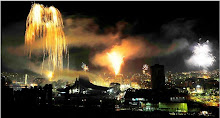
Obama won ... I am going back home :)
Goodbye Kosova/o!!!
Faleminderit and hvala for everything!!!!
Peace, am out ...
Wednesday, November 5, 2008


Wednesday, October 29, 2008
End of my Era ...
With the upcoming elections, I think it's time for me to end this blogging endeavor. I do not seem to be into it anymore. Kosovan(r)s only have their destinies in their own hands now. What they do with it is left for history to judge. I think my life and efforts are needed more at home in the US.
Unless someone proposes taking over blogging for this site, this might be my "amazing last post" for this blog.
Be blessed all and vote for Obama ... Zod knows the world needs that change (and that is a not an arrogant American statement).
Thank you all for the support thus far. Thank you Kosovo/a for providing me with a home until now.
Peace and love y'all.
Unless someone proposes taking over blogging for this site, this might be my "amazing last post" for this blog.
Be blessed all and vote for Obama ... Zod knows the world needs that change (and that is a not an arrogant American statement).
Thank you all for the support thus far. Thank you Kosovo/a for providing me with a home until now.
Peace and love y'all.
Wednesday, October 15, 2008
I have always wondered whatever happened with this matter ...
... I feel closer to Albania after reading Kadare's " The General of the Dead Army (1963)".
The final mystery
Finding the perpetrators of a lethal explosion could polish Albania’s image
The final mystery
Oct 9th 2008 | TIRANA
From The Economist print edition
From The Economist print edition
Finding the perpetrators of a lethal explosion could polish Albania’s image
A MUDDY crater marks the spot near Tirana airport where a stockpile of artillery shells blew up last March. The blast killed 26 people, including several children, and injured more than 250 others. Dozens of houses in the next-door village were ruined beyond repair.
Sali Berisha, Albania’s prime minister, responded by removing from office Fatmir Mediu, the defence minister. Damaged homes are being rebuilt with government handouts. But people are still angry. “This”, says Fiqiri Ismaili, the mayor, “was the worst disaster since communism ended.”
Finding out who caused the explosion, and bringing the culprits to justice, is a test of Albania’s credibility as a future member of NATO. It would also help Mr Berisha achieve his goal of making Albania a formal candidate to join the European Union. That is because the EU’s sharpest criticisms of Albania are directed at the country’s judicial system. All too often, prosecutors and judges are bribed or bullied by politicians.
Most of the bomb’s victims were employees of Albademil, a local contractor working for an American firm selling ammunition to the new Afghan army. When the dump exploded, some workers were repackaging 40-year-old Chinese-made shells to disguise their origin (American military contractors are banned from dealing in Chinese equipment). Others were removing gunpowder and detonators from supposedly dud shells so that the metal casings could be sold for scrap.
| |
 | |
Picking up the pieces after the blast |
Ina Rama, the chief prosecutor, who heads the investigation, says that four Albanians may soon face charges. She says that there were “no safety precautions at all” at the site. America’s Justice Department has launched its own investigation and is providing valuable help, she says. Even so, many Albanians fear that there will be a cover-up. In mid-September Kosta Trebicka, a businessman turned whistle-blower in the case, was killed when his jeep crashed on a remote mountain road. Opposition politicians claimed that the death of Mr Trebicka, who was a witness for the prosecution, was not accidental.
Mr Berisha hopes that joining NATO will help him change Albania’s reputation for corruption and lawlessness. He has already notched up successes. The economy has been growing by some 6% a year, agriculture is reviving and foreign investment is starting to flow in. A Canadian company is refurbishing neglected oilfields; a Turkish group is setting up a new mobile-phone network. A new highway to Kosovo is due to be finished next summer, boosting regional trade and encouraging tourists. Albania has also scored better in two influential reports: the World Bank’s “Doing Business” and Transparency International’s index on corruption. If justice is done over the munitions explosion, next year’s marks should be even better.
Monday, October 13, 2008
In the spirit of status quo and considering the UNSC dissed his Kosovo-related work ...
I would like to congratulate Mr. Ahtisaari for all his work and efforts at promoting international peace and the Nobel Peace award he just received. The people of Namibia congratulate you also, sir. Like they say, a prophet is never appreciated on her continent ;)
Saturday, October 11, 2008
help me...
Cafes, clubs and restaurants are opening and closing so fast in Kosovo that I cannot keep up or go to them all. Please, if you have anything to say about any cafe, club or restaurant you have been to lately, send to me at Kosovo2007@gmail.com.
ciao
ciao
Friday, October 10, 2008
Big or little sister?
Getting on with big brother
“Independent” Kosovo is in limbo, but ties with Serbia are quietly improving
Oct 9th 2008 | PRISTINA
From The Economist print edition
From The Economist print edition
“Independent” Kosovo is in limbo, but ties with Serbia are quietly improving
A BLUE flag emblazoned with a golden map of Kosovo and six white stars flutters over the Merdare border crossing. Signs welcome visitors to the independent “Republic of Kosovo”—but that is not how much of the world sees it.
Ever since Kosovo declared independence from Serbia on February 17th, after nine years of custodianship by the United Nations, it has struggled to gain international acceptance. America and 22 of 27 European Union members have recognised it, along with 26 other states. But Russia, China and most of the UN’s 192 members have shunned it. This leaves Kosovo in limbo, its legitimacy still questioned. Some 90% of its 2m people are ethnic Albanians, but several Serbian-dominated enclaves are still beyond the control of Kosovo’s government.
The UN General Assembly this week approved a Serbian motion asking the International Court of Justice (ICJ) to rule on the legality of Kosovo’s independence. The court could take one or two years to issue a non-binding ruling, but the move could dim Kosovo’s hopes of gaining wider acceptance. Its leaders took time to wake up to the threat. “They are still in the mindset of the EU and the Americans being strong and who cares about the rest?” says Ilir Deda of KIPRED, a think-tank in Pristina.
More worrying is that the EU’s police and justice mission for Kosovo, called EULEX, has been so slow to arrive. It was supposed to be up and running four months ago, but has been hobbled by both politics and logistics. Only 350 of the 1,900 international policemen, judges and other personnel due to be deployed across the country have arrived so far. And they are unable to operate in the Serbian north of Kosovo. The absence of any new UN Security Council resolutions on Kosovo’s status has left the country with a plethora of international missions, none of which knows who is supposed to do what. One Kosovar official despairs of the “organised anarchy” of the international presence.
In the absence of strong international supervision, standards of governance in Kosovo are slipping. Opposition leaders are being bought off and boards of state companies packed with cronies. A briefing paper for Pieter Feith, the EU’s representative in Kosovo, complains that recent appointees “have direct political affiliations and fail to meet minimum professional qualifications requirements”.
The overall picture is not wholly negative, however. A new school seems to open every week. Despite the estrangement of Serbs and Albanians, diplomacy is proceeding. For the first time, Kosovo Albanian ministers and top Serbian officials are talking directly, with no foreign mediators, to solve practical problems. This began in July when the new Serbian government of President Boris Tadic put new people in the ministry dealing with Kosovo. The main officials are now Kosovar Serbs who have good relations with their counterparts. Serbia’s new minister in charge served in the pre-independence government of Kosovo led by Bajram Rexhepi. Another top official, Oliver Ivanovic, speaks fluent Albanian and was once a deputy in Kosovo’s Albanian-dominated parliament.
Mr Rexhepi, now mayor of the Albanian half of the divided city of Mitrovica, says that although such contacts may not on their own be enough to normalise Kosovo’s status and its relationship with Serbia, they can make a big difference. Like his Serbian counterparts he says he cannot hold meetings or discussions officially, but that unofficial contacts continue. “In this way you can solve problems,” he says, “but without too much publicity.”
Thursday, October 9, 2008
M&M
Kosovo is recognized by 2 of its immediate neighbours : Macedonia and Montenegro.
That brings the number of recognitions to 50. We have been told to expect more recognitions in October. Does this mean better power supply? Can I get a witness up in here?!?
That brings the number of recognitions to 50. We have been told to expect more recognitions in October. Does this mean better power supply? Can I get a witness up in here?!?
Wednesday, October 8, 2008
I am not quite sure it can be taken back but let's see ....
As if the early winter and constant power cuts were not enough to make an "international" whine, the ICJ has decided to sour the moods of Kosovars with its decision to issue an advisory opinion on Kosovo's UDI.
Let the games begin?
----
Hola to Defense Secretary Robert M. Gates of the USA. Say hi to mum for me when you get home ...
Let the games begin?
----
Hola to Defense Secretary Robert M. Gates of the USA. Say hi to mum for me when you get home ...
Sunday, September 28, 2008
Oh, Boris, you just get sexier and sexier by the day ...
A new strongman
The Serbian president has become unusually powerful
Sep 18th 2008
From The Economist print edition
From The Economist print edition
The Serbian president has become unusually powerful
WITH bombers streaking overhead during a military passing-out ceremony in Belgrade on September 13th, there was no mistaking the expression of satisfaction on the face of Boris Tadic, Serbia’s president. It looked more like his victory parade. Just two months after struggling to put together a European-leaning government in July, Mr Tadic now stands as the undisputed master of his country.
This is because the largest Serbian opposition group, the ultranationalist Radical Party, has imploded thanks to an internal war between the devotees of Vojislav Seselj, currently standing trial for war crimes at the United Nations’ tribunal in The Hague, and the allies of the more pragmatic Tomislav Nikolic, who led the party within Serbia.
The split became apparent on September 2nd, when two Radical women deputies issued blood-curdling curses in parliament. They accused Mr Tadic of being “a traitor” because his government had arrested Radovan Karadzic, the former Bosnian Serb president, and sent him to stand trial in The Hague. Nothing unusual here. But then one of them, Vjerica Radeta, shouted something odd: “A curse on every Radical, on his seed and family, who ever meets with Tadic after the shameful extradition.”
Soon her meaning became clear: Mr Nikolic had been secretly meeting Mr Tadic to strike a deal to ratify a key agreement with the EU that the Radicals had hitherto opposed. Mr Nikolic announced that the agreement was good for Serbia. This raised the ire of Mr Seselj, who from his prison cell urged deputies to vote against the accord.
As a result the Radical party has fallen apart. Mr Nikolic has been expelled with 17 of his supporters and is setting up his own party. Mr Tadic is thus freer to pursue his rapprochement with the EU. “On the one hand this is the best thing that could have happened to Serbia because the Radicals are divided into pro- and anti-European wings,” says Zoran Lucic, a top Serbian pollster, “But on the other I am afraid that for some time we will have an effective one-party system.” And that party, of course, is Mr Tadic’s.
Not everything is going his way. On September 15th the Netherlands blocked an EU trade agreement with Serbia, saying it must first find and extradite Ratko Mladic, the former Bosnian Serb military commander. Now that Mr Tadic is all-powerful, that may be easier to do.
Wednesday, September 10, 2008
Tuesday, August 26, 2008
squabbles...and I am taking sides ....
According to a report from UNMIK:
"The Head of the Diocese of Raska and Prizren Bishop Artimije tried to dismiss the Decani Monastery Abbot Bishop Teodosije . . . ."
I am siding with Bishop Teodosije; he and his monks are the best hosts I have ever met in Kosovo. Open-minded with hearts of gold and love like Jesus. They have my vote anyday over whoever.
"The Head of the Diocese of Raska and Prizren Bishop Artimije tried to dismiss the Decani Monastery Abbot Bishop Teodosije . . . ."
I am siding with Bishop Teodosije; he and his monks are the best hosts I have ever met in Kosovo. Open-minded with hearts of gold and love like Jesus. They have my vote anyday over whoever.
Monday, August 25, 2008
Vote for O[s]ama - Bi[n La]den '08
To balance out my earlier endorsement, here is a public announcement for a friend of mine who is looking for Republican and right wing conservative investors for pumping out t-shirts and other election material.
"O[s]ama - Bi[n La]den" are hereby declared trademarked virtually and in real life ... royalties are expected :)
"O[s]ama - Bi[n La]den" are hereby declared trademarked virtually and in real life ... royalties are expected :)
Monday, August 18, 2008
Let's talk Human Trafficking ... again ...
... especially since Kosovo always gets special mentions in these reports.
People-trafficking and people-smuggling Drawing lines in a dark place
Aug 14th 2008 From The Economist
Coercing hapless human beings into sex or servitude is obviously evil, but defining the problem (let alone solving it) is very hard

LIVING from the forced labour, or unwillingly provided sexual services, of vulnerable people is a horrific business, and more should be done to punish the perpetrators and succour the victims. That is a sentiment to which almost all governments readily assent, even in the (quite large) slice of the world where links exist between officialdom, the police and the shady types who trade in flesh. And at least in principle, cross-border trafficking is acknowledged to be so manifestly dreadful that every civilised state must be seen to help correct this wrong. As one sign of this feeling, a Council of Europe convention on trafficking went into force this year; 17 countries have ratified it. The American government has for the past eight years been mandated by law to wage a many-fronted struggle against human trafficking, at home and around the world. And some hard arguments are now raging in Washington, involving politicians, lobby groups and rival government agencies, about whether the struggle should be escalated. Why, one might ask, should there be arguments about an issue that, in moral terms, seems so clear-cut? Mainly because the precise definition of trafficking, and hence of trafficking victims, is in reality quite difficult—whether you are a policeman or a moral philosopher.
Among pundits, people-trafficking is distinguished from the lesser evil of people-smuggling—an uncomfortable but almost unavoidable part of social reality in areas that adjoin rich countries with a demand for labour. In Kosovo, it is an open secret that you can be whisked illegally to Vienna by paying €4,000 ($6,000) to a professional smuggler. The Bosnian town of Bijeljina, once a black spot for ethnic cleansing, is now a way-station for south Asians who pay around $16,000 per head to be smuggled into the EU heartland: half on departure and half on arrival.
People-smuggling is done with the consent of those involved; they have no further debt to the gangsters who abet them once they arrive. Trafficking means moving people under duress or false pretences—or in order to use them for forced labour (ranging from domestic work to commercial sex). So the theory goes; but in practice, as the latest State Department report concedes, there is an overlap between the two activities. It often happens, for example, that a poor Indian is hired for menial work in a Gulf state—only to find that his wage is much less than promised, and his passport is seized. This leads to a form of servitude, and that person’s treatment could be called trafficking. Despite the grey area, public perception of the two problems often diverges. In Australia, for example, public opinion favours a tough line over people-smuggling—but there has been a surge of sympathy for the victims of trafficking (often brought to Australia from Thailand or Indochina) since the release last year of “The Jammed”, a film set in a Melbourne brothel.
And in recent years both the sharper definition of, and the fight against, human-trafficking have become a high priority for the State Department; its grading of other countries’ anti-trafficking efforts is an elaborate and closely-watched business. Countries in “tier 1” (including most of the EU but not Ireland, Greece, Estonia or Latvia) are deemed to comply fully with the minimum standards of American law. Those in “tier 2” don’t yet comply but are trying hard. A lower tier, labelled “Watch List”, consists of countries that are trying, but not hard enough or with good enough results. In the bottom “tier 3” (including American allies like Saudi Arabia) are those that are neither complying nor trying hard enough. Even rickety post-Soviet states (see chart) can improve their scores if they follow what is deemed to be the right advice. As the State Department has found, it is hard to discuss cross-border trafficking without looking at what occurs inside countries. Its reports have thus broadened into a more general look at the ways in which people are forced to work or have sex against their will. Servitude, it finds, can take many forms: for example, children are mutilated and forced to beg—or else fight in ghastly wars. Slavery, the State Department suggests, happens in many successful emerging economies; it cites bonded labour in Brazil’s plantations, or children working long hours making bricks in China. Indeed, bits of the department’s 2008 report read as though they were penned by a left-of-centre NGO, decrying the dark side of globalisation.And some of the other ideological issues now coming to a head in Washington are even more contentious. Behind them all is an emotive question: whether there can be such a thing as willing prostitution.
How far can you go?
Since 2002, the policy of the United States has been to oppose prostitution, and to urge all governments to “reduce the demand” for prostitutes through education and by punishing those who patronise them. But how far can this principle be pressed? As passed by the House of Representatives last year, a new bill on protecting the victims of trafficking could have made it illegal for Americans to consort with prostitutes anywhere in the world (even when the prostitutes are adults, and in countries where buying sex is legal). The House version of the bill would also broaden the obligations of America’s federal (as opposed to state) authorities to curb the trafficking of sex workers inside the country. The Justice Department (amid many other objections) said all this would place a huge burden on federal agencies that are already overstretched. Supporters of stepping up the fight (who range from feminist groups to the religious right) compare their campaign to that of William Wilberforce, whose efforts to free the British empire’s slaves bore fruit 200 years ago. John Miller, an ex-head of the State Department’s anti-trafficking programme, has deplored the Justice Department’s campaign to modify the proposed legislation; its complaints, he says, imply leniency towards an absolute evil, slavery. But the American Civil Liberties Union, a lobby group, has praised the Senate for deleting language which, in its view, would make prostitution and trafficking virtually identical. Lots more arguments can be expected before the bill reaches the White House. In fact, says Jorgen Carling, a Norwegian who has studied the trafficking of Nigerian women to Europe, it is rarely possible to draw the absolutely clear line that policymakers want between “innocent victimhood” and “willing participation” in sex work. For example, people may know that they are being taken abroad as sex workers, but have no idea of the harsh conditions, and the absolute loss of control over their lives, that they will face. This may be an area of life where most people can recognise evil when they see the details of one horrifying case—but where it will always be hard to make hard-and-fast rules that suit every country
People-trafficking and people-smuggling Drawing lines in a dark place
Aug 14th 2008 From The Economist
Coercing hapless human beings into sex or servitude is obviously evil, but defining the problem (let alone solving it) is very hard

LIVING from the forced labour, or unwillingly provided sexual services, of vulnerable people is a horrific business, and more should be done to punish the perpetrators and succour the victims. That is a sentiment to which almost all governments readily assent, even in the (quite large) slice of the world where links exist between officialdom, the police and the shady types who trade in flesh. And at least in principle, cross-border trafficking is acknowledged to be so manifestly dreadful that every civilised state must be seen to help correct this wrong. As one sign of this feeling, a Council of Europe convention on trafficking went into force this year; 17 countries have ratified it. The American government has for the past eight years been mandated by law to wage a many-fronted struggle against human trafficking, at home and around the world. And some hard arguments are now raging in Washington, involving politicians, lobby groups and rival government agencies, about whether the struggle should be escalated. Why, one might ask, should there be arguments about an issue that, in moral terms, seems so clear-cut? Mainly because the precise definition of trafficking, and hence of trafficking victims, is in reality quite difficult—whether you are a policeman or a moral philosopher.
Among pundits, people-trafficking is distinguished from the lesser evil of people-smuggling—an uncomfortable but almost unavoidable part of social reality in areas that adjoin rich countries with a demand for labour. In Kosovo, it is an open secret that you can be whisked illegally to Vienna by paying €4,000 ($6,000) to a professional smuggler. The Bosnian town of Bijeljina, once a black spot for ethnic cleansing, is now a way-station for south Asians who pay around $16,000 per head to be smuggled into the EU heartland: half on departure and half on arrival.
People-smuggling is done with the consent of those involved; they have no further debt to the gangsters who abet them once they arrive. Trafficking means moving people under duress or false pretences—or in order to use them for forced labour (ranging from domestic work to commercial sex). So the theory goes; but in practice, as the latest State Department report concedes, there is an overlap between the two activities. It often happens, for example, that a poor Indian is hired for menial work in a Gulf state—only to find that his wage is much less than promised, and his passport is seized. This leads to a form of servitude, and that person’s treatment could be called trafficking. Despite the grey area, public perception of the two problems often diverges. In Australia, for example, public opinion favours a tough line over people-smuggling—but there has been a surge of sympathy for the victims of trafficking (often brought to Australia from Thailand or Indochina) since the release last year of “The Jammed”, a film set in a Melbourne brothel.
And in recent years both the sharper definition of, and the fight against, human-trafficking have become a high priority for the State Department; its grading of other countries’ anti-trafficking efforts is an elaborate and closely-watched business. Countries in “tier 1” (including most of the EU but not Ireland, Greece, Estonia or Latvia) are deemed to comply fully with the minimum standards of American law. Those in “tier 2” don’t yet comply but are trying hard. A lower tier, labelled “Watch List”, consists of countries that are trying, but not hard enough or with good enough results. In the bottom “tier 3” (including American allies like Saudi Arabia) are those that are neither complying nor trying hard enough. Even rickety post-Soviet states (see chart) can improve their scores if they follow what is deemed to be the right advice. As the State Department has found, it is hard to discuss cross-border trafficking without looking at what occurs inside countries. Its reports have thus broadened into a more general look at the ways in which people are forced to work or have sex against their will. Servitude, it finds, can take many forms: for example, children are mutilated and forced to beg—or else fight in ghastly wars. Slavery, the State Department suggests, happens in many successful emerging economies; it cites bonded labour in Brazil’s plantations, or children working long hours making bricks in China. Indeed, bits of the department’s 2008 report read as though they were penned by a left-of-centre NGO, decrying the dark side of globalisation.And some of the other ideological issues now coming to a head in Washington are even more contentious. Behind them all is an emotive question: whether there can be such a thing as willing prostitution.
How far can you go?
Since 2002, the policy of the United States has been to oppose prostitution, and to urge all governments to “reduce the demand” for prostitutes through education and by punishing those who patronise them. But how far can this principle be pressed? As passed by the House of Representatives last year, a new bill on protecting the victims of trafficking could have made it illegal for Americans to consort with prostitutes anywhere in the world (even when the prostitutes are adults, and in countries where buying sex is legal). The House version of the bill would also broaden the obligations of America’s federal (as opposed to state) authorities to curb the trafficking of sex workers inside the country. The Justice Department (amid many other objections) said all this would place a huge burden on federal agencies that are already overstretched. Supporters of stepping up the fight (who range from feminist groups to the religious right) compare their campaign to that of William Wilberforce, whose efforts to free the British empire’s slaves bore fruit 200 years ago. John Miller, an ex-head of the State Department’s anti-trafficking programme, has deplored the Justice Department’s campaign to modify the proposed legislation; its complaints, he says, imply leniency towards an absolute evil, slavery. But the American Civil Liberties Union, a lobby group, has praised the Senate for deleting language which, in its view, would make prostitution and trafficking virtually identical. Lots more arguments can be expected before the bill reaches the White House. In fact, says Jorgen Carling, a Norwegian who has studied the trafficking of Nigerian women to Europe, it is rarely possible to draw the absolutely clear line that policymakers want between “innocent victimhood” and “willing participation” in sex work. For example, people may know that they are being taken abroad as sex workers, but have no idea of the harsh conditions, and the absolute loss of control over their lives, that they will face. This may be an area of life where most people can recognise evil when they see the details of one horrifying case—but where it will always be hard to make hard-and-fast rules that suit every country
Friday, August 8, 2008
Official Endorsement!!! - Luna loses her mind ....
After 2 summer of thoughts and vanity checks, this blog has decided to finally and officially endorse:

for the US President. Cute, smart, a fresh of breath air atimes and sometimes loopy but definitely no angel, this might just be the man to lead US through trying changing times. Well, he has my vote come November. I want to encourage all of you with friends and relatives who are Americans to encourage them to vote for this beautiful man in the November elections.
gObama!!!

It's Summer and it's here ....
Welcome to the 2008 Olympics in China!!!
The Chinese left no carpets unturned for the opening event ... dazzling. Though Kosovo might not have a team there, it is still a very good distraction for the summer from competing news of of war, pillage and skirmishes ... there goes Russia trying to start a war with Georgia .... enjoy the show!!!
The Chinese left no carpets unturned for the opening event ... dazzling. Though Kosovo might not have a team there, it is still a very good distraction for the summer from competing news of of war, pillage and skirmishes ... there goes Russia trying to start a war with Georgia .... enjoy the show!!!
Thursday, August 7, 2008
BBC on Life in Kosovo
BBC has been running a series of stories on people's lives in Kosovo. Nothing too analytical. They pick someone (usually a guy, of course) and tell his story and issues concerning him and his environment. Nice readings. Here are links and excerpts to stories thus far:
Kosovo lives: A mixed village
""The most painful thing for us, is when we see people selling up and leaving," says Dragana Gospic. And she relates how one of her neighbours, a fellow Serb, has just sold his land, and is now selling his house. "Each person who leaves makes it harder for those who remain," she explains. At 33, originally from the Bosnian town of Mrkonjic Grad, she lives in the village of Vidanje, near Klina in central Kosovo, with her husband Ranko and daughters Tanja and Sanja."
Kosovo lives: Ivan's journey
"Ivan Radic is one of nearly a quarter of a million people from Kosovo still classified by the UN as internally displaced persons (IDPs) nine years after the war. The vast majority are ethnic Serbs, now scattered across Serbia with a minority living in Kosovo's enclaves. Most of the hundreds of thousands of wartime Albanian IDPs were able to return home long ago. "I am in Urosevac almost every night - when I dream," Ivan tells me, remembering his birthplace as we stand on the central bridge in the town of Mitrovica."
Kosovo lives: Albanian in Mitrovica
"On the table in his front room, Driton Gerguri opens a red album, like a family heirloom.
"Other kids collected stamps, but I collected these," he says proudly. Page after page of carefully mounted badges and tie pins, from sporting events and factories, anniversaries and celebrations.
Each is like a crumb of the common life that people of different nationalities used to live in the old Yugoslavia. Taken together, the album is like a carefully preserved cake of a bygone world. "
Kosovo lives: Between two worlds
"His English is flawless, local knowledge near faultless but having him guide you around Pristina can take awfully long. Mehmed Sezai Shehu, or Meti as he likes to be known, seems barely able to cross a street without running into an acquaintance in the Kosovan capital. On the two visits I have met him, a simple stroll about the city centre became a wade through handshakes, jokes and banter. Not a few of the people knew him from across a kitchen table or a classroom desk because for the past decade, apart from the war period, Meti has been teaching his city English full-time. "
Kosovo lives: Not gone with the wind
Their great-grandfather built Urosevac, the Nikolic daughters like to say, so how can they leave it now? Sani (Santipa), the very image of mildness and physical slightness, beams mischievously at the memory of how she floored a US soldier with her karate skills, the day K-For came to evacuate her family. I am not saying she is over 60, because her disabled younger sister Lili (Liljana) reminded me, when I inquired, that you must never ask a lady her age. A smile of assent crossed the mask-like face of their blind mother Dani (Daniela).
Kosovo lives: A mixed village
""The most painful thing for us, is when we see people selling up and leaving," says Dragana Gospic. And she relates how one of her neighbours, a fellow Serb, has just sold his land, and is now selling his house. "Each person who leaves makes it harder for those who remain," she explains. At 33, originally from the Bosnian town of Mrkonjic Grad, she lives in the village of Vidanje, near Klina in central Kosovo, with her husband Ranko and daughters Tanja and Sanja."
Kosovo lives: Ivan's journey
"Ivan Radic is one of nearly a quarter of a million people from Kosovo still classified by the UN as internally displaced persons (IDPs) nine years after the war. The vast majority are ethnic Serbs, now scattered across Serbia with a minority living in Kosovo's enclaves. Most of the hundreds of thousands of wartime Albanian IDPs were able to return home long ago. "I am in Urosevac almost every night - when I dream," Ivan tells me, remembering his birthplace as we stand on the central bridge in the town of Mitrovica."
Kosovo lives: Albanian in Mitrovica
"On the table in his front room, Driton Gerguri opens a red album, like a family heirloom.
"Other kids collected stamps, but I collected these," he says proudly. Page after page of carefully mounted badges and tie pins, from sporting events and factories, anniversaries and celebrations.
Each is like a crumb of the common life that people of different nationalities used to live in the old Yugoslavia. Taken together, the album is like a carefully preserved cake of a bygone world. "
Kosovo lives: Between two worlds
"His English is flawless, local knowledge near faultless but having him guide you around Pristina can take awfully long. Mehmed Sezai Shehu, or Meti as he likes to be known, seems barely able to cross a street without running into an acquaintance in the Kosovan capital. On the two visits I have met him, a simple stroll about the city centre became a wade through handshakes, jokes and banter. Not a few of the people knew him from across a kitchen table or a classroom desk because for the past decade, apart from the war period, Meti has been teaching his city English full-time. "
Kosovo lives: Not gone with the wind
Their great-grandfather built Urosevac, the Nikolic daughters like to say, so how can they leave it now? Sani (Santipa), the very image of mildness and physical slightness, beams mischievously at the memory of how she floored a US soldier with her karate skills, the day K-For came to evacuate her family. I am not saying she is over 60, because her disabled younger sister Lili (Liljana) reminded me, when I inquired, that you must never ask a lady her age. A smile of assent crossed the mask-like face of their blind mother Dani (Daniela).
Monday, July 28, 2008
You saw it here FIRST!!!: Pilot Production of S&M
Good morning all,
I have been granted exclusive rights to broadcast the Pilot for the upcoming of "s&m feat. Madame b". Hope you enjoy it and please feel free to send in comments so I can forward to the producers. I am sure it will encourage them to make it a regular production. Good job guys....
-----------
What really matters...


I have been granted exclusive rights to broadcast the Pilot for the upcoming of "s&m feat. Madame b". Hope you enjoy it and please feel free to send in comments so I can forward to the producers. I am sure it will encourage them to make it a regular production. Good job guys....
-----------
What really matters...


Tuesday, July 22, 2008

Monday, July 21, 2008
Most wanted Bosnian Serb delivered ....
Mr. Radovan Karadzic was delivered today to the world:
One of the world's most wanted men, the former Bosnian Serb leader Radovan Karadzic, was arrested last night in Serbia after 12 years on the run from charges of genocide and war crimes.The man indicted for the Srebrenica massacre and the Sarajevo siege, among other war crimes, was arrested by Serbian security officers and taken before a war crimes court in Belgrade, according to a statement from the office of the Serbian president, Boris Tadic. . . .
Thank you, Tadic & co.
PS: For people who wrote asking if I dislike Serbs due to some of my posts in the past, the answer is NO. If I hated Serbs, I would have no sex life in the Balkans. I think Serb men and women are some of the sexiest in the region, except for some montenegrans and rich Slovenians. A mother only chastises the child she loves ...
--------------------
UPDATE:
Karadzic Extradited to The Hague to Face War Crimes Charges - Wednesday, July 30, 2008
One of the world's most wanted men, the former Bosnian Serb leader Radovan Karadzic, was arrested last night in Serbia after 12 years on the run from charges of genocide and war crimes.The man indicted for the Srebrenica massacre and the Sarajevo siege, among other war crimes, was arrested by Serbian security officers and taken before a war crimes court in Belgrade, according to a statement from the office of the Serbian president, Boris Tadic. . . .
Thank you, Tadic & co.
PS: For people who wrote asking if I dislike Serbs due to some of my posts in the past, the answer is NO. If I hated Serbs, I would have no sex life in the Balkans. I think Serb men and women are some of the sexiest in the region, except for some montenegrans and rich Slovenians. A mother only chastises the child she loves ...
--------------------
UPDATE:
Karadzic Extradited to The Hague to Face War Crimes Charges - Wednesday, July 30, 2008
Sunday, July 6, 2008
Most famous and wanted Serb in NYC
A friend flagged me on this news from NYC, asking if I ever dated this guy while in Mass or the Balkans (f****** retard that my friend is). Apparently, this chap is very wanted in the US....
No official search for fugitive student
3 July 2008 16:47 -> 18:37 Source: B92, FoNet
BELGRADE -- Serbian institutions have yet to receive any official information from the U.S. regarding the case of Miladin Kovačević.The Serbian national is suspected of brutally assaulting a fellow student Bryan Steinhauer on May 4 in the United States. State Prosecutor Slobodan Radovanović told B92 that Serbia will do everything it can to solve the case once it receives an official request. Radovanović said that the only information he has about the case has been through the media. “The American institutions can rest assured that Serbia will do everything within its legal possibilities to sanction this and to make sure that possible perpetrators of such act are not left unpunished." "On the other hand, I must say that we are still waiting for an official demand and official information, and we will act according to that,” Radovanović said. In the meantime, the government yesterday, in connection to the case, dismissed the New York consul-general, Slobodan Nenadović. Kovačević was issued a new passport by the consulate, even though a U.S. court was did not allow him to leave the country. The student Kovačević is accused of assaulting is currently in a coma. Kovačević has put into custody after the event, but released on June 5 on USD 100,000 bail. Serbian vice-consul Igor Milošević issued the suspect a new passport after the original one was confiscated, which allowed Kovačević to flee America. Disciplinary actions will be taken against the vice-consul, but Radovanović said today that the diplomat might face criminal charges as well. Earlier today, a Kovačević family lawyer said the case has a political dimension. "This case is above all a legal issue that is now under the jurisdiction of Serbian law. The law on criminal proceedings categorically rules out extradition of a Serbian citizen to a foreign country during criminal proceedings if the citizen is on Serbian territory,” Veselin Cerović told FoNet. The lawyer believes that the case is becoming more and more political thanks to the sensationalist approach to the case in certain domestic and foreign media, and by statements coming from “certain American senators in attempt to promote themselves.” "Everything is absolutely clear in this case. Any type of questioning of Kovačević, who is a Serbian citizen, should be conducted by the domestic judiciary, once all the relevant and valid documents have been received from U.S. officials,” Cerović said, adding that everything should be carried out in accordance with Serbian law. He said that Kovačević had been released from custody by the U.S. authorities, after paying the bail. "When that decision was made, the court adequately estimated the possible real damage that might be incurred in the event of Kovačević leaving the United States, and thus becoming unavailable to the U.S. judicial system,” Cerović explained. He did not want to comment on how Kovačević had managed to leave the United States or on whose passport Kovačević had used, stating only that he would talk about it at a press conference scheduled for tomorrow. According to the U.S. media, Kovačević’s family pressured Serbian vice-consul Igor Milošević into issuing him a new passport, thus enabling Kovačević to return to Serbia. On Monday, U.S. Ambassador to Belgrade Cameron Munter called on the Serbian authorities to react, and return Kovačević to the United States to face trial.
----------
UPDATE
By Jack Carey, USA TODAY
United States government officials are continuing to press for the return of a former Binghamton University basketball player, who was arrested and charged in the severe beating of a fellow student before fleeing last month to Serbia. Representatives from the offices of New York Democratic senators Charles Schumer and Hillary Rodham Clinton along with staff members of the Senate Foreign Relations Committee met Wednesday with Vladimir Petrovic, the Serbian Embassy's Charge d'Affairs, to urge that Miladin Kovacevic be returned for trial, and expressed that there would be "significant consequences for Serbia" if the matter was not resolved, a joint statement from the senators said. Kovacevic, a Serbian national, was charged in connection with the alleged May 4 assault of Bryan Steinhauer at a Binghamton, N.Y., bar. The incident fractured Steinhauer's skull and left him in a coma two weeks before he was to graduate with a degree in accounting. Kovacevic was jailed on a felony assault charge and forced to surrender his passport. However, on June 6 the Serbian Consulate in New York posted the $100,000 bail for Kovacevic and aided his return to Serbia by issuing an emergency passport. Serbian foreign minister Vuk Jeremic said Monday in Belgrade that Kovacevic would not be extradited and suggested U.S. authorities hand over the case file so Kovacevic could be prosecuted in Serbia. Kovacevic last week signed a contract with a Serbian basketball team, which said it expects him to show up for the start of the club's practice sessions on Aug. 10. "Because of the aid of Serbian officials, Mr. Kovacevic is living his life openly and freely in Serbia while the Steinhauer family is spending every day praying that their son will recover from his life-threatening injuries," Clinton said in the statement. "We continue to urge the Serbian government to do everything in its power to uphold the rule of law and facilitate the immediate and unconditional return of Mr. Kovacevic to face prosecution."
-------------
No official search for fugitive student
3 July 2008 16:47 -> 18:37 Source: B92, FoNet
BELGRADE -- Serbian institutions have yet to receive any official information from the U.S. regarding the case of Miladin Kovačević.The Serbian national is suspected of brutally assaulting a fellow student Bryan Steinhauer on May 4 in the United States. State Prosecutor Slobodan Radovanović told B92 that Serbia will do everything it can to solve the case once it receives an official request. Radovanović said that the only information he has about the case has been through the media. “The American institutions can rest assured that Serbia will do everything within its legal possibilities to sanction this and to make sure that possible perpetrators of such act are not left unpunished." "On the other hand, I must say that we are still waiting for an official demand and official information, and we will act according to that,” Radovanović said. In the meantime, the government yesterday, in connection to the case, dismissed the New York consul-general, Slobodan Nenadović. Kovačević was issued a new passport by the consulate, even though a U.S. court was did not allow him to leave the country. The student Kovačević is accused of assaulting is currently in a coma. Kovačević has put into custody after the event, but released on June 5 on USD 100,000 bail. Serbian vice-consul Igor Milošević issued the suspect a new passport after the original one was confiscated, which allowed Kovačević to flee America. Disciplinary actions will be taken against the vice-consul, but Radovanović said today that the diplomat might face criminal charges as well. Earlier today, a Kovačević family lawyer said the case has a political dimension. "This case is above all a legal issue that is now under the jurisdiction of Serbian law. The law on criminal proceedings categorically rules out extradition of a Serbian citizen to a foreign country during criminal proceedings if the citizen is on Serbian territory,” Veselin Cerović told FoNet. The lawyer believes that the case is becoming more and more political thanks to the sensationalist approach to the case in certain domestic and foreign media, and by statements coming from “certain American senators in attempt to promote themselves.” "Everything is absolutely clear in this case. Any type of questioning of Kovačević, who is a Serbian citizen, should be conducted by the domestic judiciary, once all the relevant and valid documents have been received from U.S. officials,” Cerović said, adding that everything should be carried out in accordance with Serbian law. He said that Kovačević had been released from custody by the U.S. authorities, after paying the bail. "When that decision was made, the court adequately estimated the possible real damage that might be incurred in the event of Kovačević leaving the United States, and thus becoming unavailable to the U.S. judicial system,” Cerović explained. He did not want to comment on how Kovačević had managed to leave the United States or on whose passport Kovačević had used, stating only that he would talk about it at a press conference scheduled for tomorrow. According to the U.S. media, Kovačević’s family pressured Serbian vice-consul Igor Milošević into issuing him a new passport, thus enabling Kovačević to return to Serbia. On Monday, U.S. Ambassador to Belgrade Cameron Munter called on the Serbian authorities to react, and return Kovačević to the United States to face trial.
----------
UPDATE
By Jack Carey, USA TODAY
United States government officials are continuing to press for the return of a former Binghamton University basketball player, who was arrested and charged in the severe beating of a fellow student before fleeing last month to Serbia. Representatives from the offices of New York Democratic senators Charles Schumer and Hillary Rodham Clinton along with staff members of the Senate Foreign Relations Committee met Wednesday with Vladimir Petrovic, the Serbian Embassy's Charge d'Affairs, to urge that Miladin Kovacevic be returned for trial, and expressed that there would be "significant consequences for Serbia" if the matter was not resolved, a joint statement from the senators said. Kovacevic, a Serbian national, was charged in connection with the alleged May 4 assault of Bryan Steinhauer at a Binghamton, N.Y., bar. The incident fractured Steinhauer's skull and left him in a coma two weeks before he was to graduate with a degree in accounting. Kovacevic was jailed on a felony assault charge and forced to surrender his passport. However, on June 6 the Serbian Consulate in New York posted the $100,000 bail for Kovacevic and aided his return to Serbia by issuing an emergency passport. Serbian foreign minister Vuk Jeremic said Monday in Belgrade that Kovacevic would not be extradited and suggested U.S. authorities hand over the case file so Kovacevic could be prosecuted in Serbia. Kovacevic last week signed a contract with a Serbian basketball team, which said it expects him to show up for the start of the club's practice sessions on Aug. 10. "Because of the aid of Serbian officials, Mr. Kovacevic is living his life openly and freely in Serbia while the Steinhauer family is spending every day praying that their son will recover from his life-threatening injuries," Clinton said in the statement. "We continue to urge the Serbian government to do everything in its power to uphold the rule of law and facilitate the immediate and unconditional return of Mr. Kovacevic to face prosecution."
-------------
Subscribe to:
Posts (Atom)